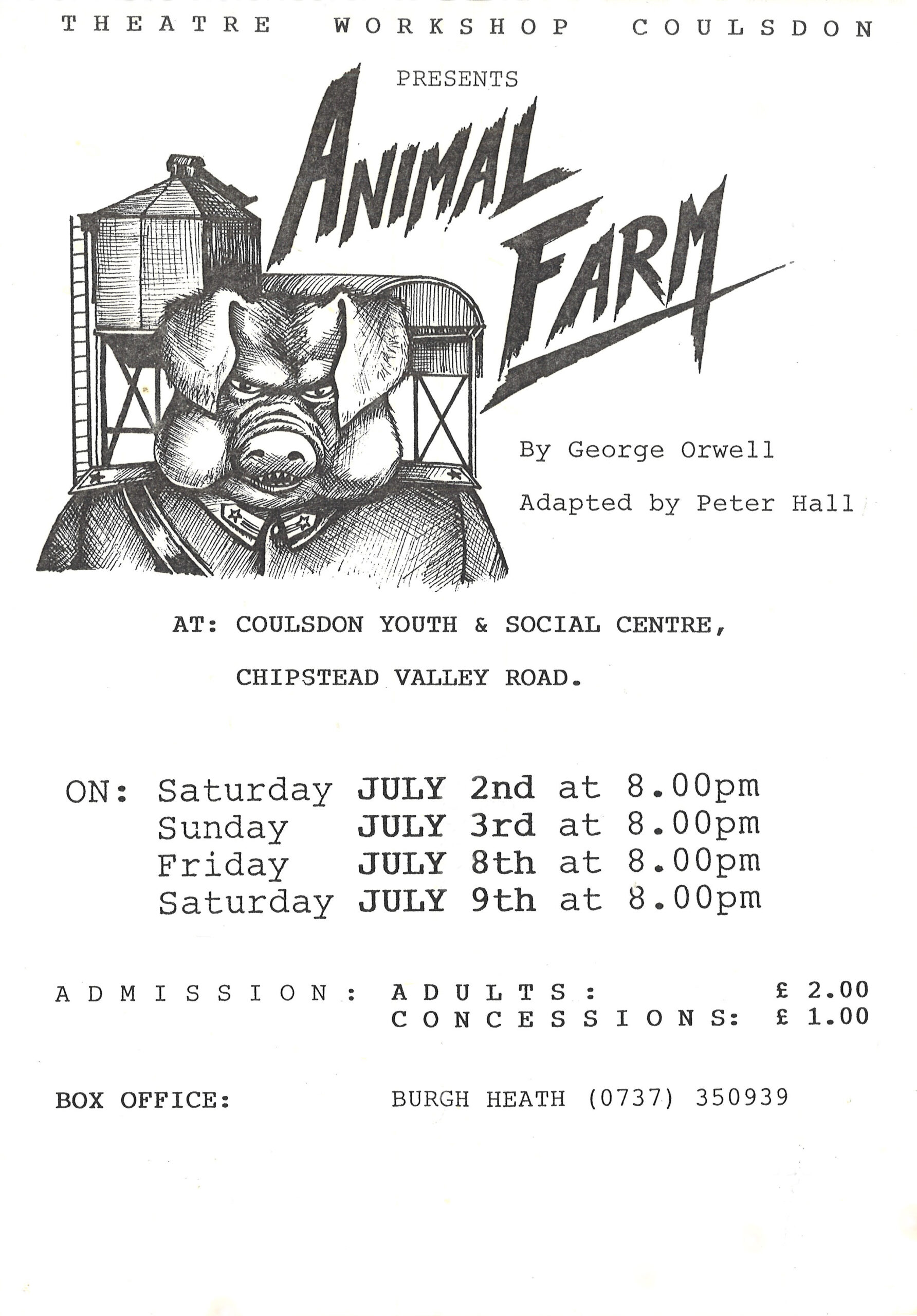
One night, all the animals at Manor Farm gather in the barn to hear ‘Old Major’, a pig, describe a dream he had about a world where all animals live free from the tyranny of their human masters. The elderly pig dies soon after the meeting, but the animals — inspired by his philosophy of Animalism — plot a rebellion against the farmer, Jones. When Jones drunkenly forgets to feed the animals, they rise up, and Jones and his farmhands are chased away. Manor Farm is renamed Animal Farm, and the Seven Commandments of Animalism are painted on the barn wall. But what follows is far from the dream that Old Major promised…
‘All Animals Are Equal – But Some Are More Equal Than Others’
George Orwell’s ‘Animal Farm’ is a powerful and uncompromising allegory of the Russian revolution, with every character and event that takes place in his tale mirroring Russian history from October 1917 through to the Teheran Conference of 1943.
The succession of steps through which, by persuasion, propaganda, lies and force, Napoleon rises to power in ‘Animal Farm’ are a bitter parody of Josef Stalin’s ascent to dictatorship, and what Orwell saw as the ultimate betrayal of the Russian people.
A fable, a satire, a fairy story, ‘Animal Farm’ is one of the great works of English literature, and a revealing study of the effects of power.
The evocative, and by association, now chilling music chosen by the director to open the production was ‘Fantasia on a theme by Thomas Tallis’ written by Ralph Vaughan Williams. The same composer’s ‘Five variants of Dives and Lazarus’ was used to maintain the mood during the interval.