Oh What A Lovely War
About the Production
Our open air Summer 2026 production will be the musical entertainment that is ‘Oh What a Lovely War’.
Created by Joan Littlewood’s Theatre Workshop in 1963, ‘Oh What a Lovely War’ tells the story of the First World War through popular songs and music of the period. Known as ‘The Great War’ and even ‘The War To End All Wars’ (sadly so very wrong) the four years of bloody conflict between August 1914 and November 1918 resulted in the deaths of millions and changed the entire global landscape. Old empires fell, new ones began to rise, and the seeds were sewn not for lasting peace, but for conflict to come.
This is not a tale of bravery and heroism. By balancing music hall songs such as ‘Roses of Picardy‘, ‘Hold Your Hand Out, You Naughty Boy‘, ‘I’ll Make A Man Out Of You‘ and ‘Keep The Home Fires Burning‘ with tunes from the trenches such as ‘I Don’t Want To Be A Soldier‘, ‘Gassed Last Night‘, ‘When This Lousy War Is Over‘ and of course ‘Oh What A Lovely War‘, with sketches shedding light on what went on both on the front lines and behind them, the play lays bare the stupidity, corruption and futility of the war, at the same time sending up mercilessly the upper echelons of Britain’s military, more concerned with prestige and position and outdated ideology, unable or unwanting to change in the face of new technologies such as the machine gun, poison gas, aeroplane or tank, capable of dispensing death on a new, industrial scale.
With the men in the frontline being ordered to do the impossible, their best, and sometimes their only, armour was a sense of humour, and this production showcases that brilliantly. Come and see us, join in the songs (you’ll know more than you think) and laugh along with the Tommies, the lions led by donkeys…

The Cast
Behind the Scenes
Image Gallery






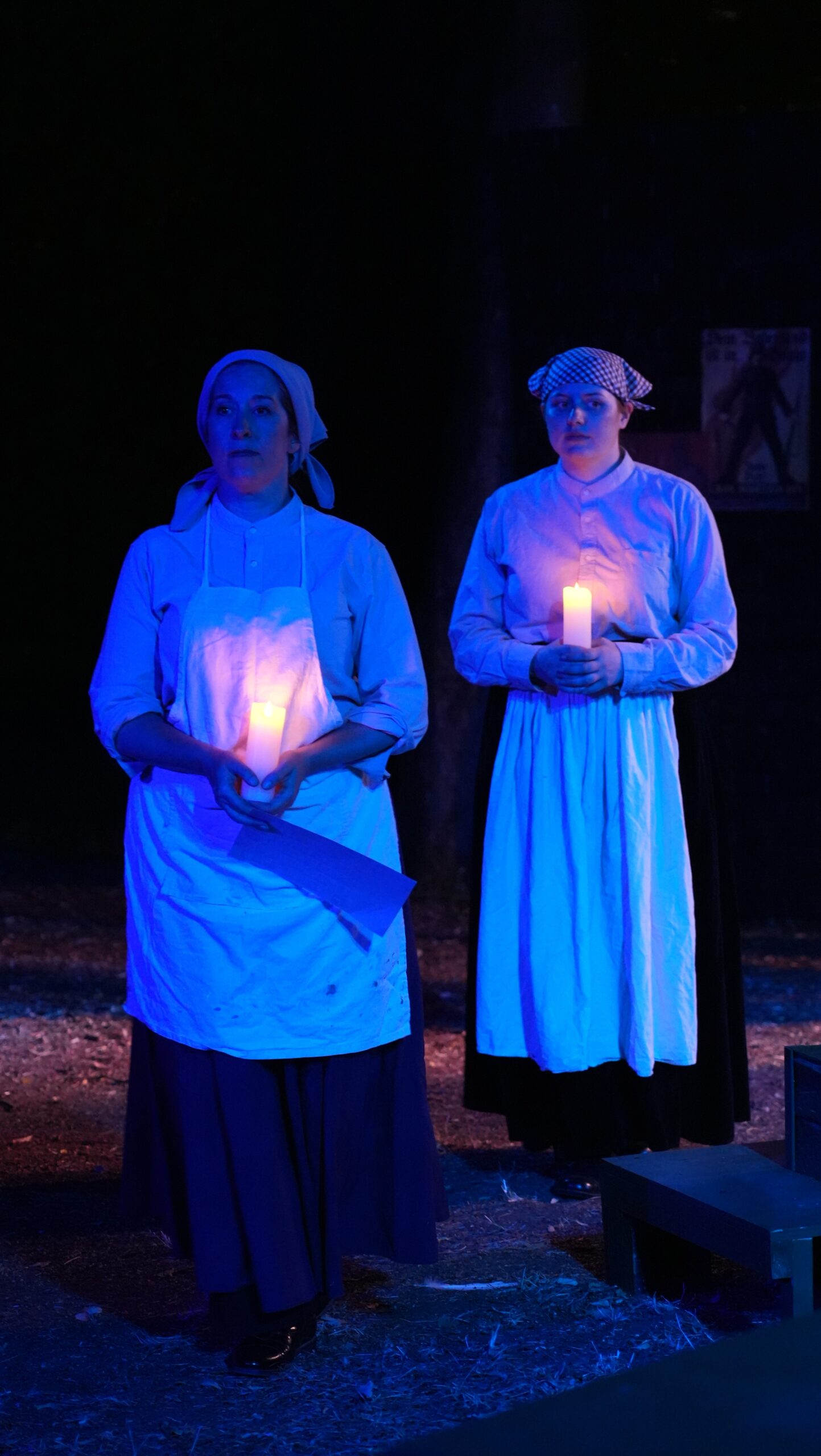
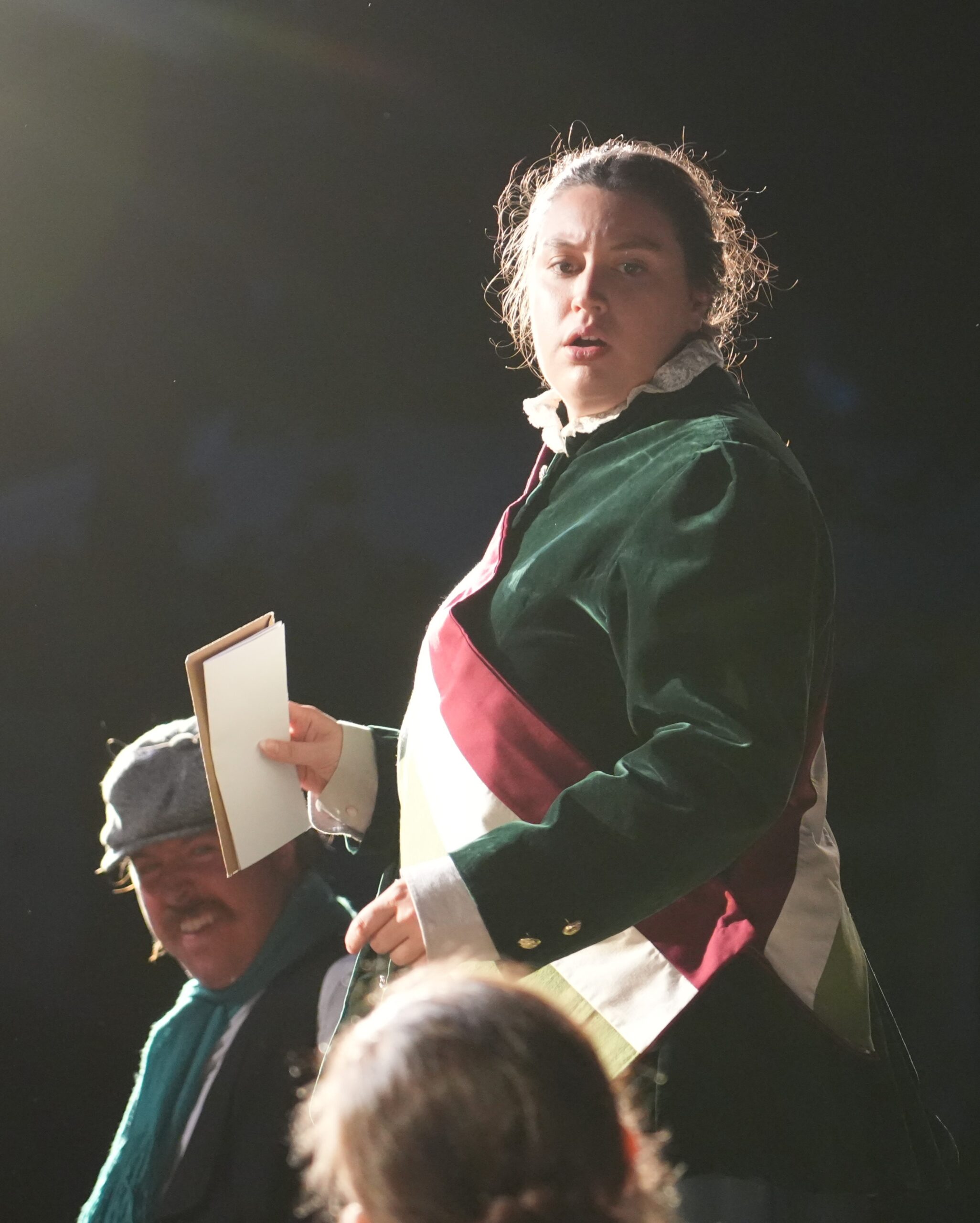
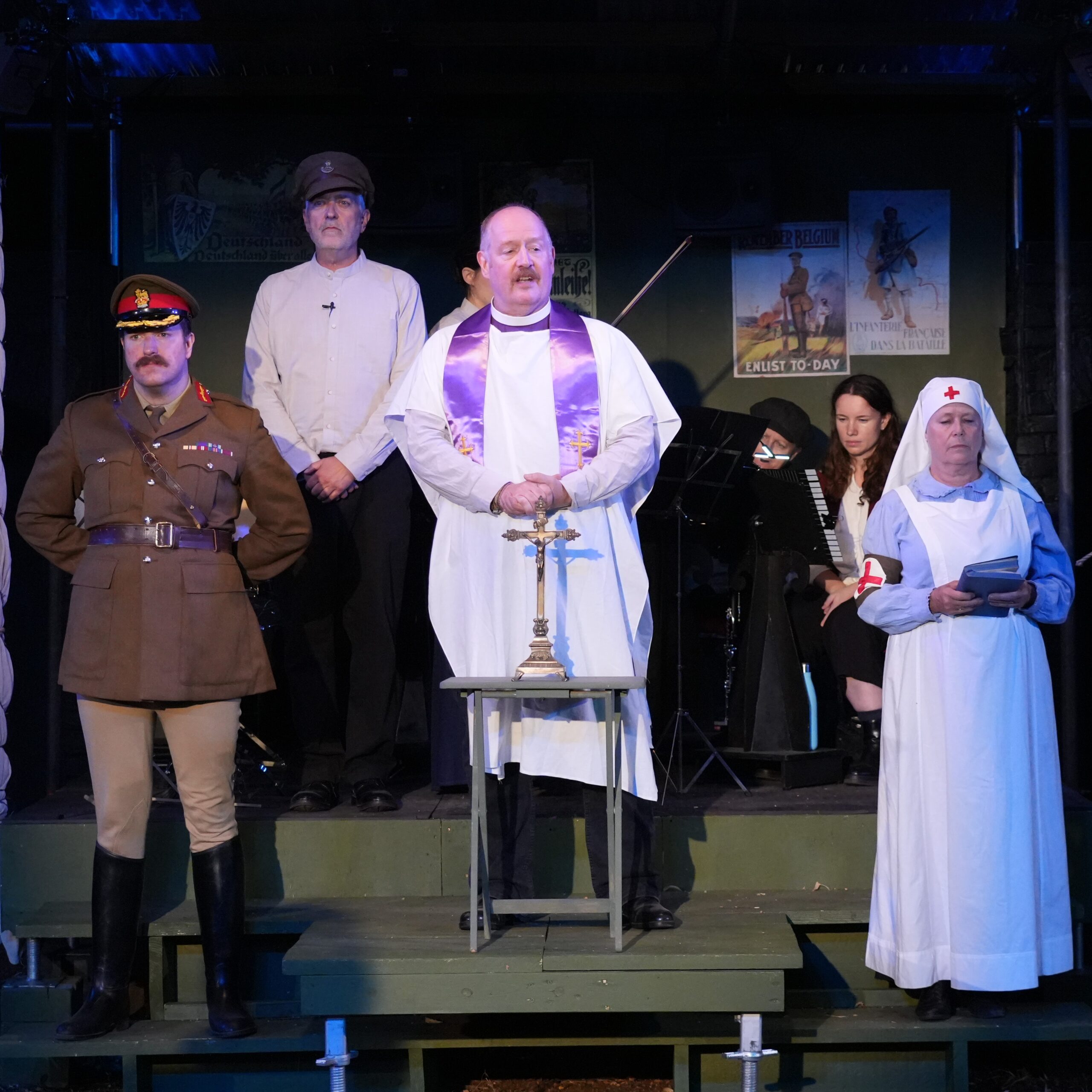


The Reviews
I wasn’t sure what to expect: a play not written but ‘created’ in 1963, and a musical to boot, about World War I – the Great War, the war to end all wars. I was expecting an anachronism of empire and glory mixed with the futility of trench warfare and the unforgivable ‘tactic’ of attrition. Sounded like a yawn-fest.
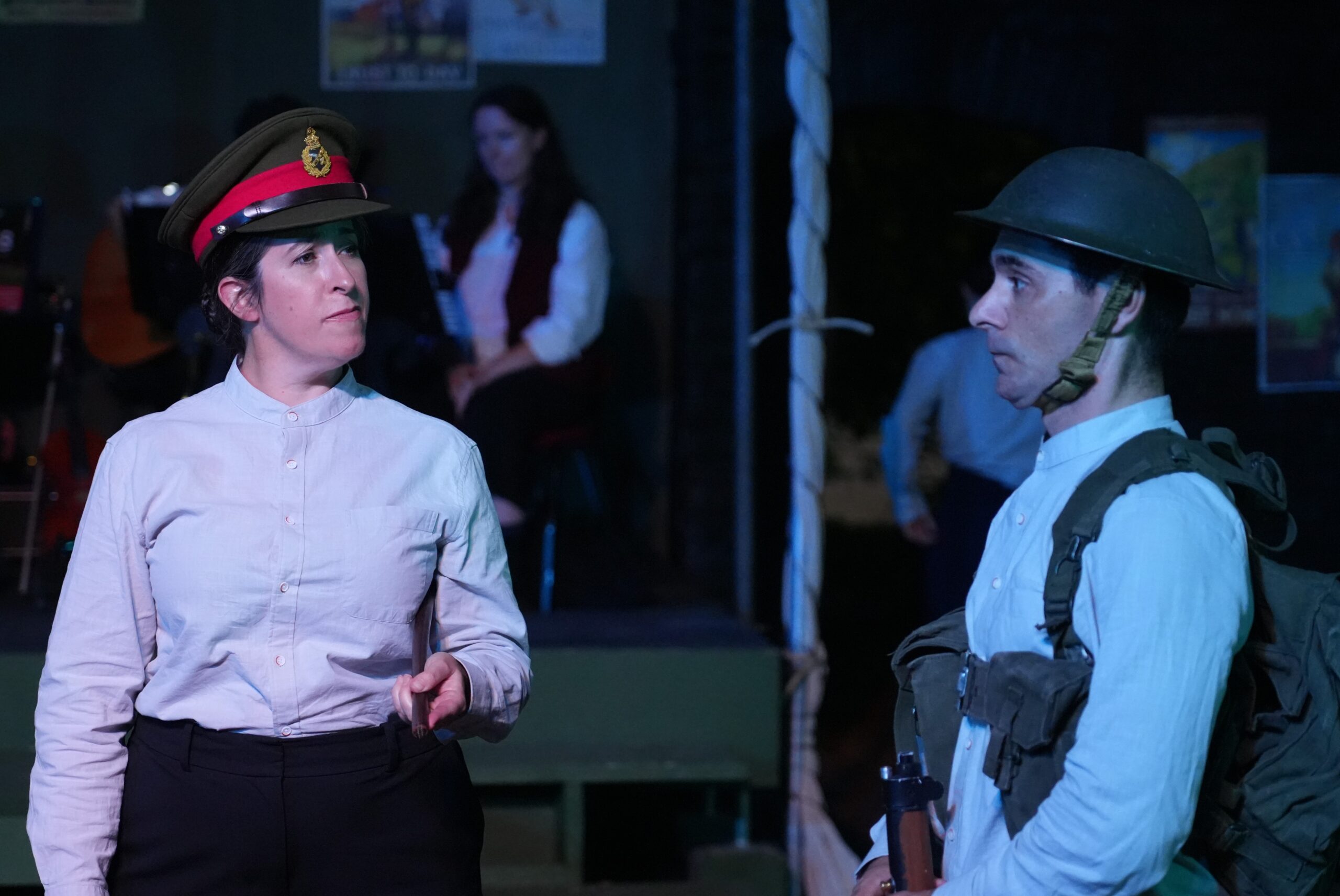
It isn’t a play in the conventional sense, with characters we invest in and follow through an arc. There are no main characters. Instead, we get a series of vignettes, each one a slice of the war: on the Home Front, in the war rooms and on the battlefield. The audience pieces them together, making the whole from the parts. There was more dialogue than I expected, but it is spoken more with a feeling of en masse than individually, each actor contributing to a collective voice, except for the character of Field Marshal Douglas Haig (played by Joe Wilson), the donkey to his lion troops. There are two stark divides running through the play. The first is gender. Women are white-laced patriots emotionally blackmailing men to enlist, using white feathers to stigmatise and shame those still not in uniform. The second is class: the upper classes remain aloof, still enjoying their balls, grouse shoots and servants while others die.
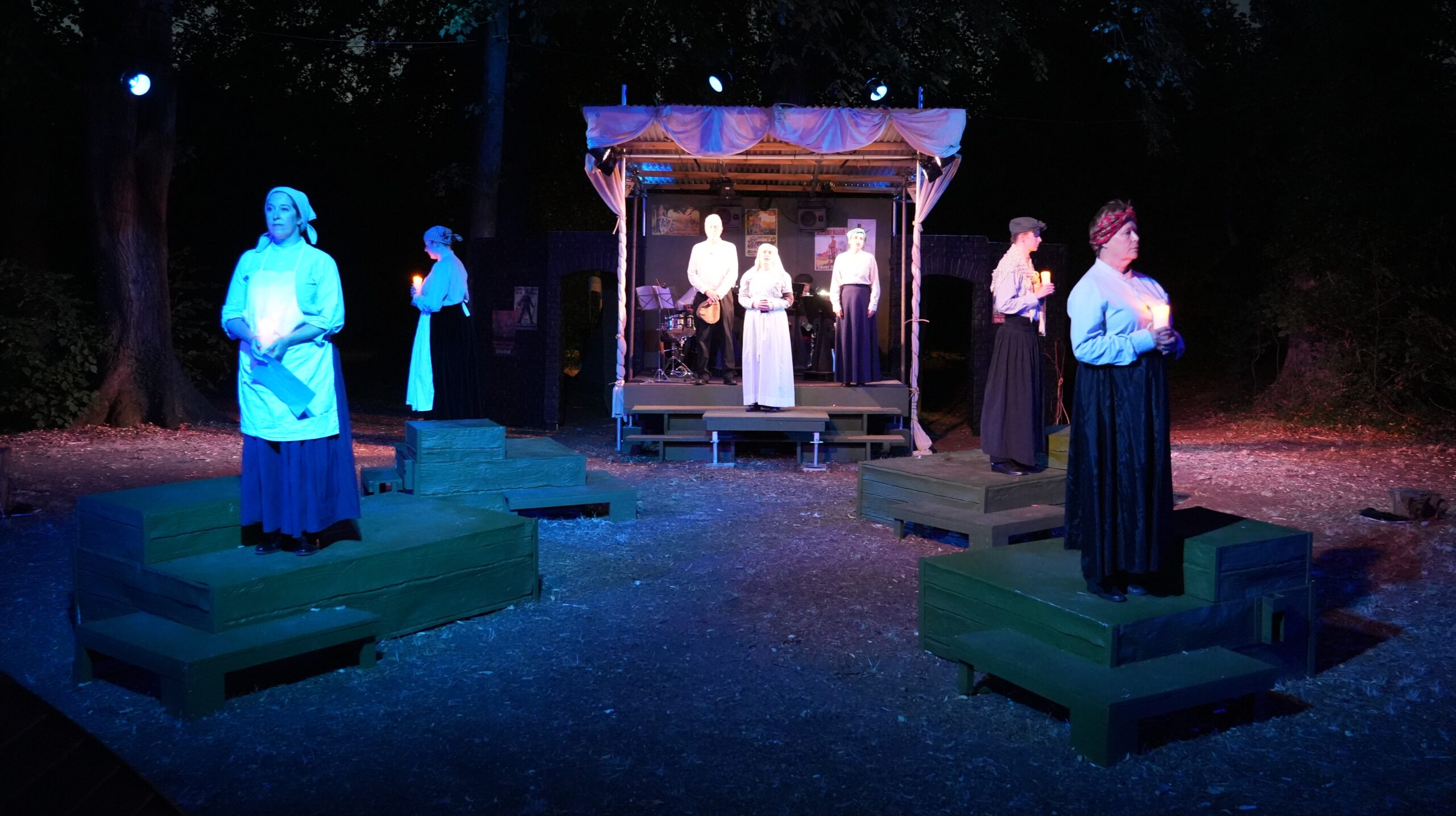
The delightful bower of Coulsdon Manor Hotel provides an apt backdrop. We have the real sky above us, darkening as the trenches deepen, while actual birds call over the carnage. The singing and songs are the counterpoint to the bombs, bangs and bullets. The gentle trio of musicians, sheltered in their dugout, keep us in touch with civilisation while, in the foreground, men are mown down in numbers boldly and baldly relayed over the loudspeaker: thousands, millions destroyed in hours and days for – the anonymous voice tells us – the gain of nil.
The best line is delivered by Chris Argles playing “plucky little Belgium” (General Leman) during the vignette ‘The Allies Confer’. Disgusted by the deliberations of France and Britain while his own country is routed, he takes his leave with a heartfelt, “I piss on you all.” Crude, funny, it captures the horror, the hell and the humour. The standout scene was the Irish troops ‘Riverdancing’ their way into battle to the tune of an Irish jig, and onwards to their inevitable slaughter. The most poignant scenes were the Christmas Day exchanges across the trenches: chocolates and puddings lobbed to each other, along with Christmas greetings. Equally memorable was the humour of the British soldiers’ bafflement at the German language, neatly juxtaposed with the Germans’ perfect understanding of English. Talking of German, the articulation of the German dialogue by Dan Carr and Hannah Montgomery was excellent; it certainly wasn’t butchered.
Near the end we hear the heart-wrenching Keep the Home Fires Burning, led by Anya Destiney, a beautiful, haunting melody that captures the pathos, sadness and waste of war. But the play keeps us on a seesaw. It ends with the defiantly upbeat Oh What a Lovely War, which, after all we have witnessed, now sounds macabre. It echoed, reverberated and moved.
The acting was spot on. We get clearly delineated flavours of character: the Tommies, the officers, the upper-class women, the working-class women. There’s a nice use of space, while the lighting and sound are varied and never overdone. The explosions are used sparingly, so that when the bombs do fall they are genuinely horrific. The choreography, too, is imaginative, especially given the limitations of the space. Couples dance cheek to cheek on raised platforms, while the soldiers march just enough to give us a sense of formation, discipline and regiment.
Only two gripes. First, the music playing as the audience arrived. Was it punk rock? Whatever it was, it felt incongruous and provocative. Something more period would have set the tone and whetted the appetite. Second, as the twilight settled and the battles grew darker and darker, great wafts of noxious odour swirled through the audience like poison gas drifting from the Portaloos. But perhaps, if you’re going to have an olfactory prop, the stench of male piss is apt. It would also have been nice if TWC had added a little of their own improvisation, especially as no mention was made of that great catastrophic spawn of the war: the Russian Revolution.
Unconventional, chaotic, loosely structured, perhaps a little past its sell-by date, Oh What a Lovely War nevertheless remains a thoughtful piece of theatre. TWC injected it with their usual soul and spirit, giving us an authentic and memorable witness to the reality of war.
Michelle Scorziello, audience review
Other Productions