Dark Deeds at St. Mildred’s
About the Production
Welcome to ‘Dark Deeds at St Trynian’s’ – a homage to the St Trinian’s books created by the cartoonist Ronald Searle (1920 – 2011) between 1941 and 1954. Searle’s cartoons were hugely popular – the antithesis on the Enid Blyton-type posh girl’s boarding school; its pupils are wicked and well-armed, and mayhem is rife. The Gothic cartoons often showed the dead bodies of girls who had been skewered with pitchforks, tortured by their classmates, or succumbed to violent team sports. Searle started to draw these cartoons whilst a prisoner of war of the Japanese. Perhaps it was his way of dealing with the unimaginable horror.
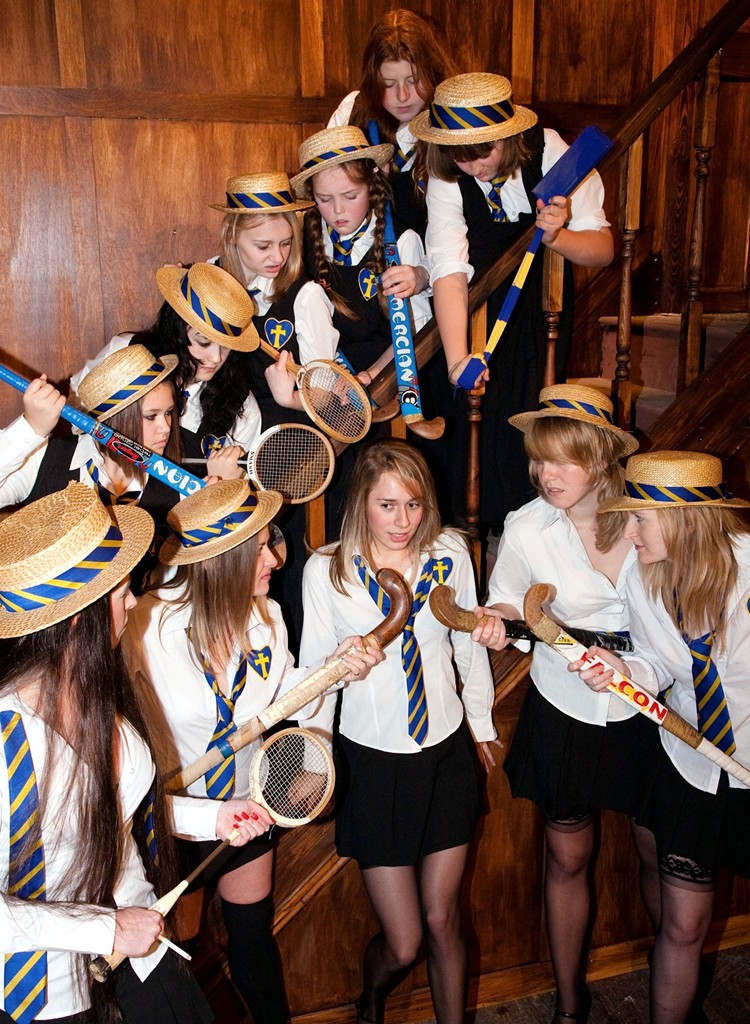
Four movies, based on Searle’s cartoons, were made between 1954 and 1966. There was a remake in 1980 and another in 2007. St Trinian’s is portrayed as an unorthodox girls school where sex, smoking, drinking and gambling aren’t on the curriculum – but they’re not exactly frowned upon either. The girls come in two categories: the Fourth Form, most closely resembling Searle’s original drawings of ink-stained, ungovernable pranksters, and the much older Sixth Form, sexually precocious to a degree that must have seemed alarming in 1954 (one of the girls is even married). The Fourth Form includes a number of much younger girls who are the most ferocious of all. The rule of thumb is that the smaller a St Trinian’s girl, the more dangerous she is – especially with a lacrosse or hockey stick in her hands.
Sadistic, cunning, dissolute, crooked, sordid and capable of any excess, the films implied that the girls were mainly the daughters of well-off gangsters, crooks, shady bookmakers and other low-lifes.
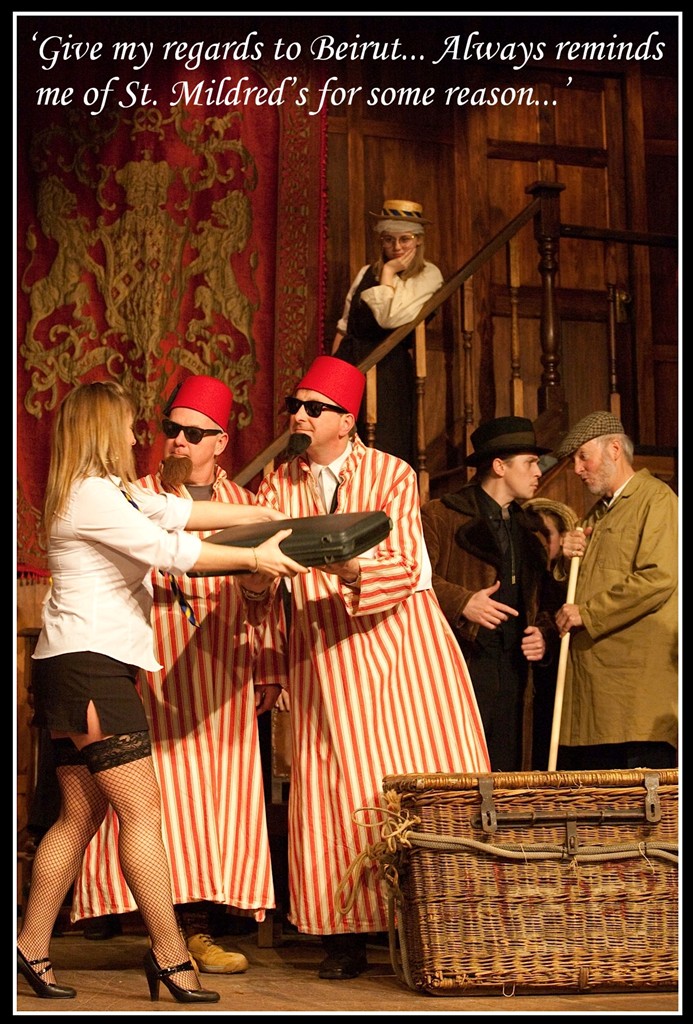
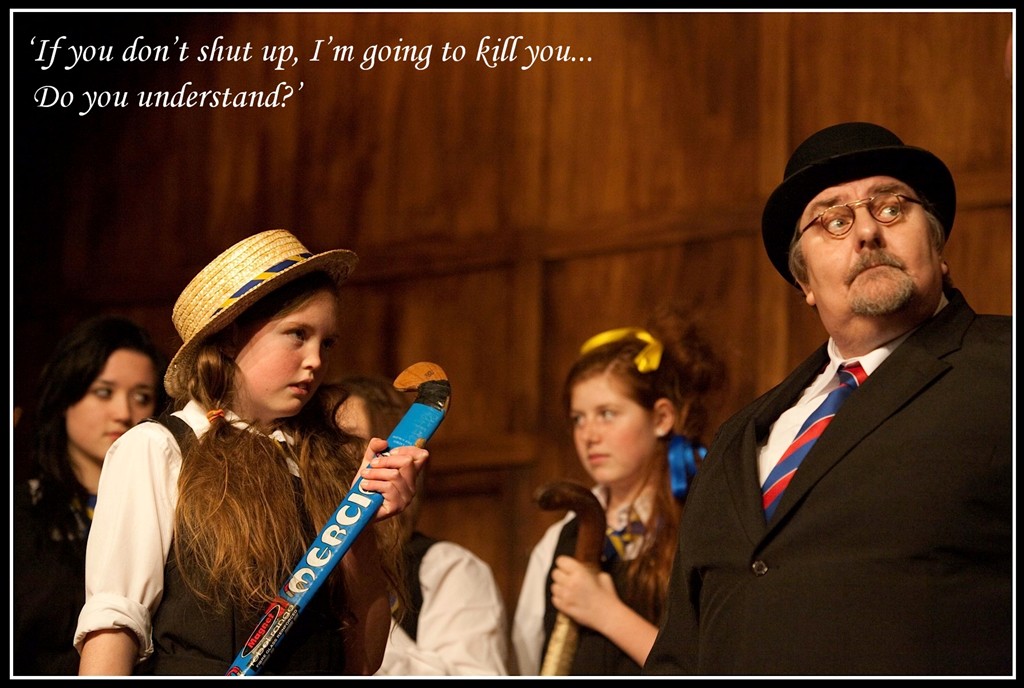
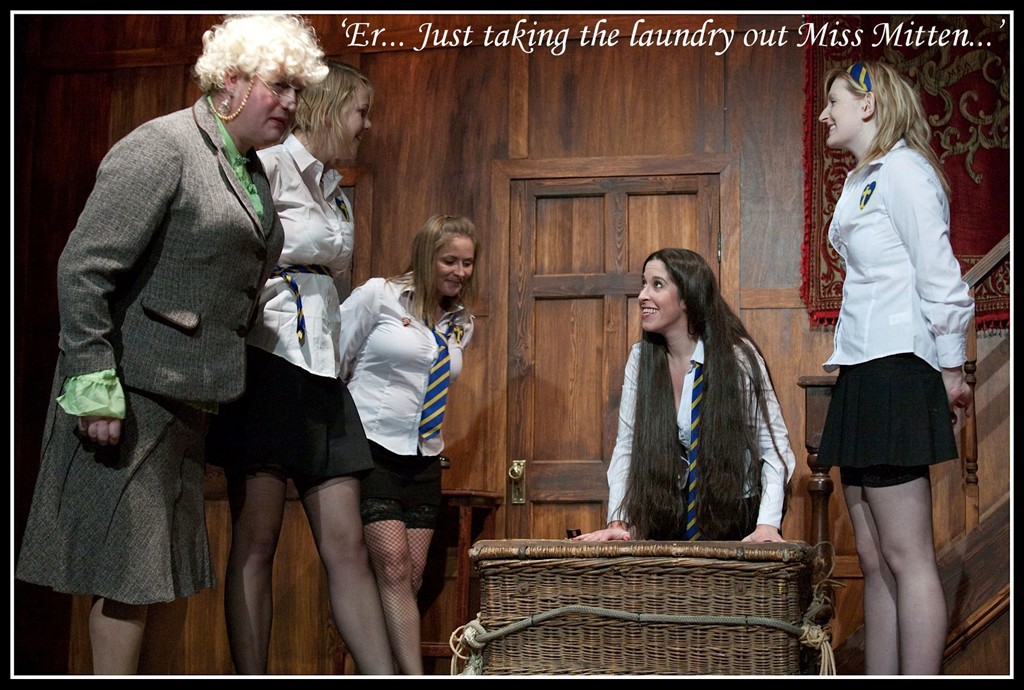
Our production is loosely based on some of the characters from the St Trinian’s books and movies, but with a wholly home-grown script and story. Firmly set in a comfy, non-specific era of post-war nostalgia sometime around the middle of the last century, it bears no resemblance to the recent ‘updated’ movies of St Trinian’s. (Sorry about that, if you were expecting Girls Aloud…)

The Cast
Behind the Scenes
Image Gallery

The Reviews
Girl's on the loose at St Trynian's - Four Stars
The short gymslips and laddered stockings are familiar but the tale is new – written by Richard Lloyd who also directed the show it deals with kidnapping, undercover police work, the Ministry of Education and general skullduggery.
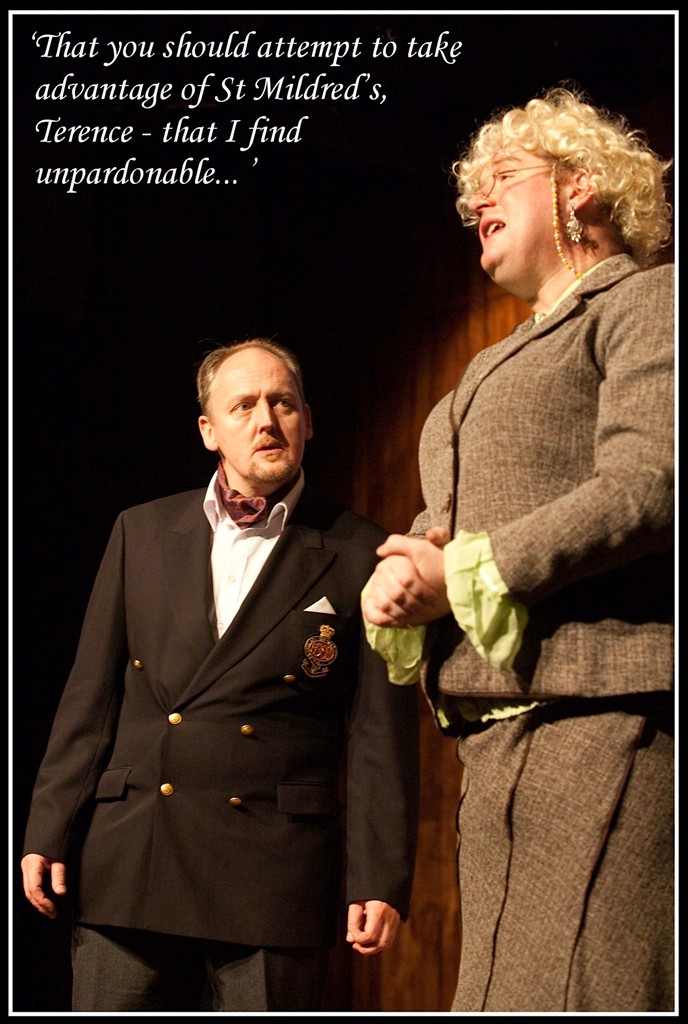
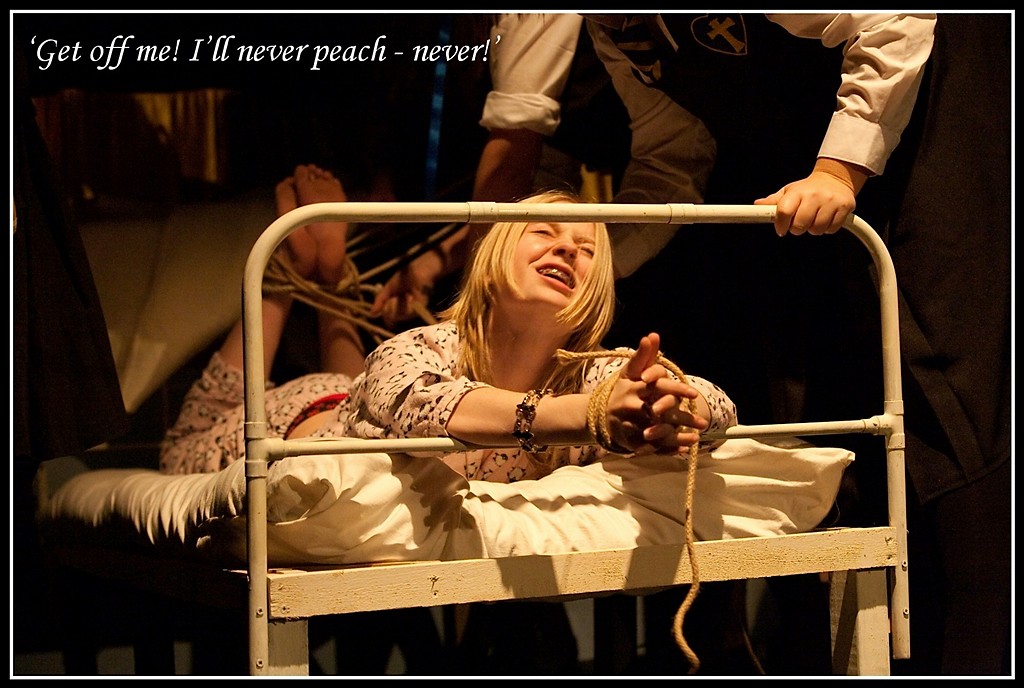
Under the seemingly benign laissez-faire headmistress, played in the best Alistair Sim mould by Mike Brown, the girls run riot. When the fourth form are caught hauling a trussed up victim, she gives the reminder “remember, no permanent marks”.
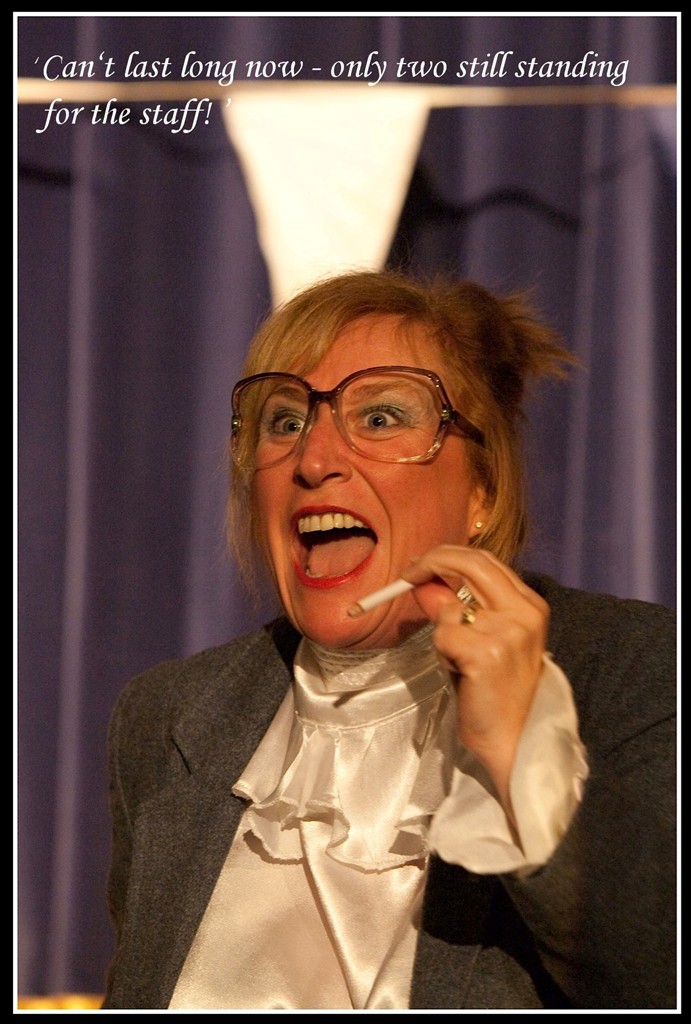
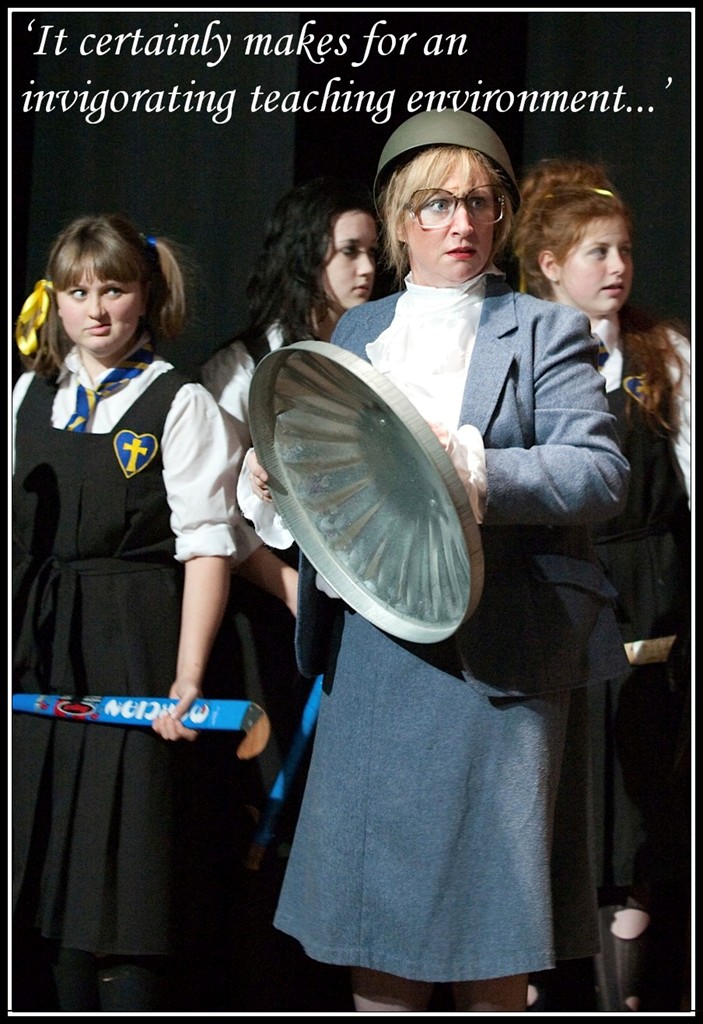
In the staff room, things are no better than they should be – Matron (engagingly played by Sheila Bird) is permanently drunk, Miss Leyton, the English teacher’s English leaves much to be desired with Penny Payne sustaining a coarse cockney accent, Miss Butcher (Rosie Martin) teaches sport, Art Mistress Miss Potts (Lisa Lloyd) smokes pot and Tania Gauci is the immigrant who may be able to teach French.
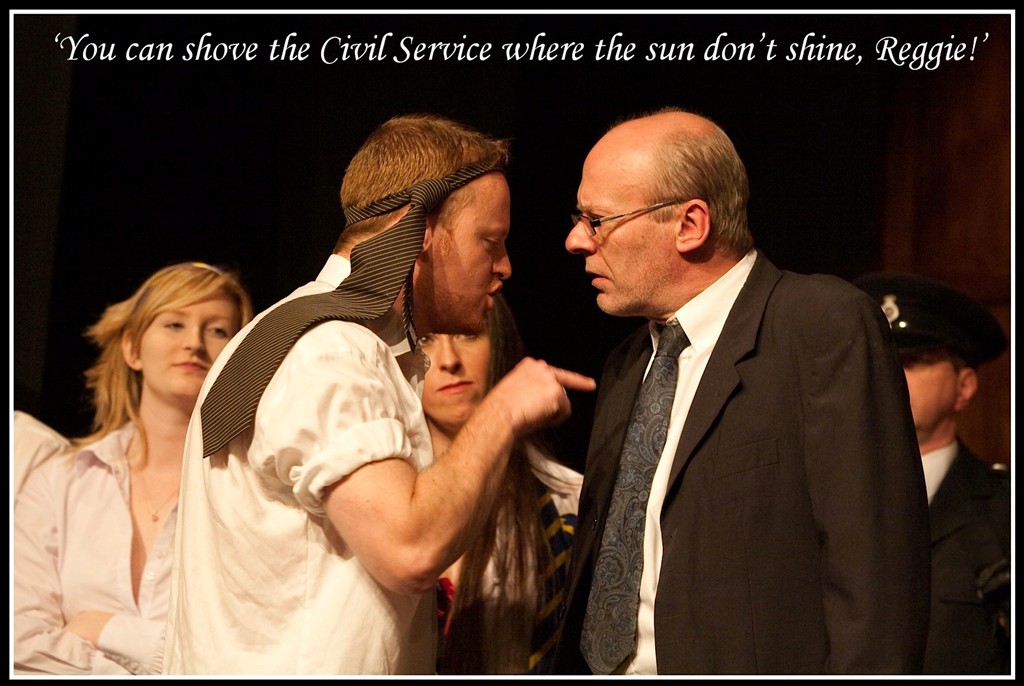
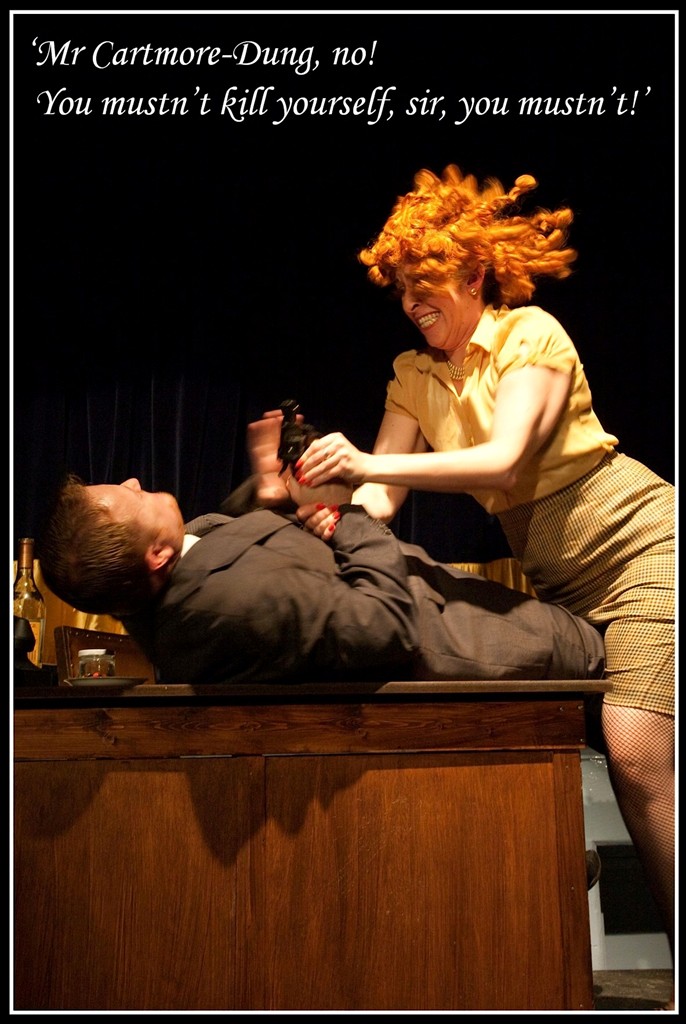
There are men in suits from Whitehall, although Algy Cartmore-Dung certainly loosens up eventually – Luke Argles metamorphosing nicely, whilst Bruce Montgomery’s Mr Brownose is staid throughout. The accents are different but the upper and lower class wide boys are both intent on duplicity with Paul Ford as Clarence Fritton and Peter Bird as the cheeky ‘Flash’ Harry..
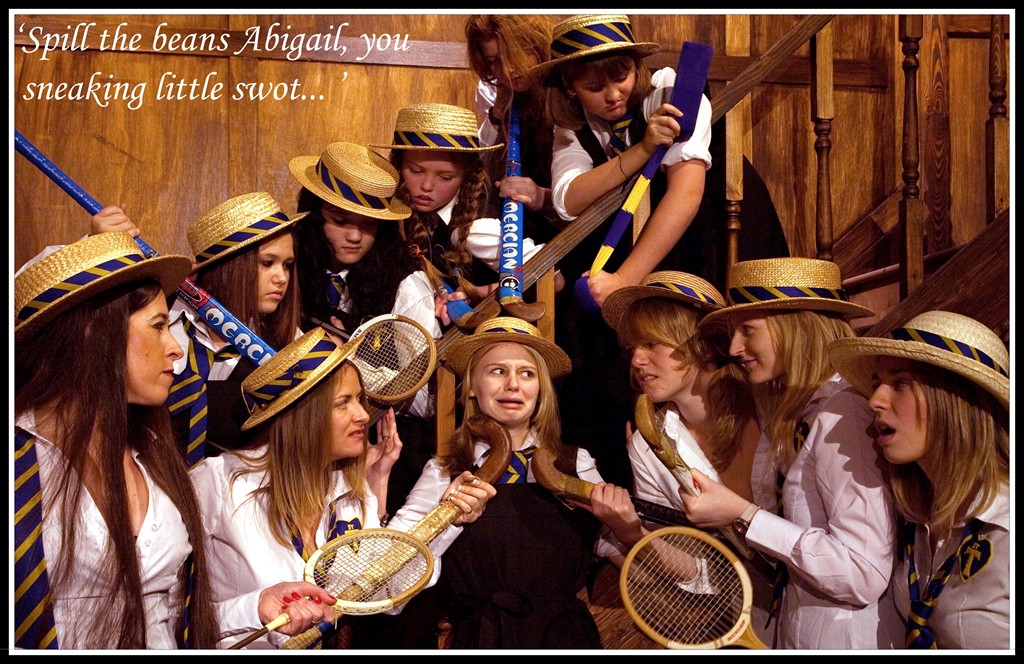
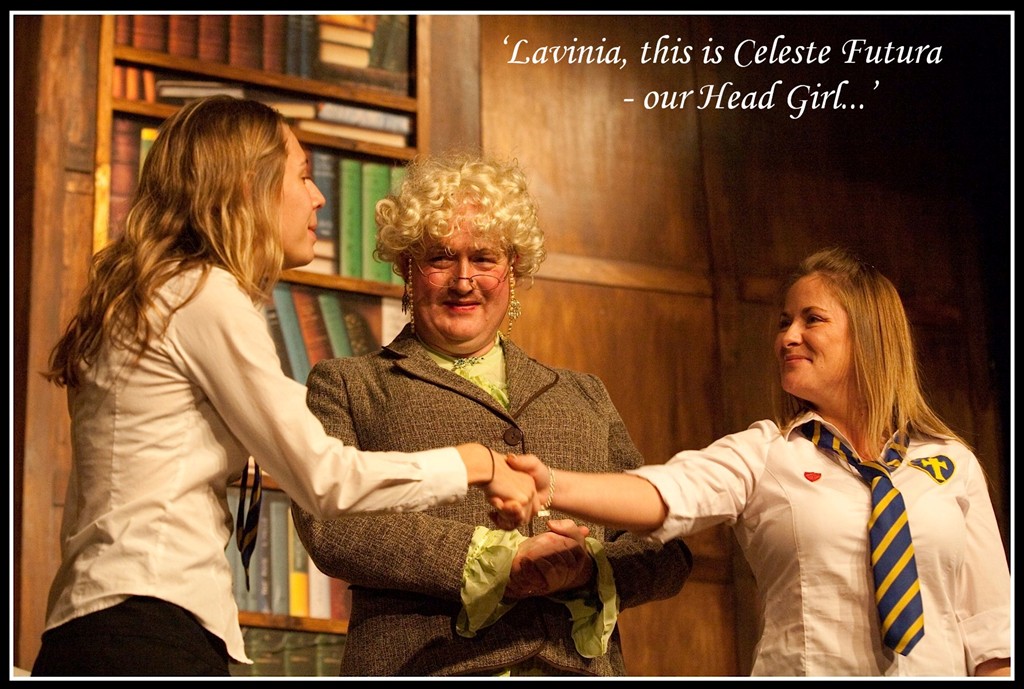
The plotting of dark deeds is led by head girl Celeste (Kimberley Argles) with Alex Inglis as Arabella thwarting plans as a double agent fourth former. Lucy-Ann Martin is Lavinia, the girl in the firing line and here is more duplicity at work.
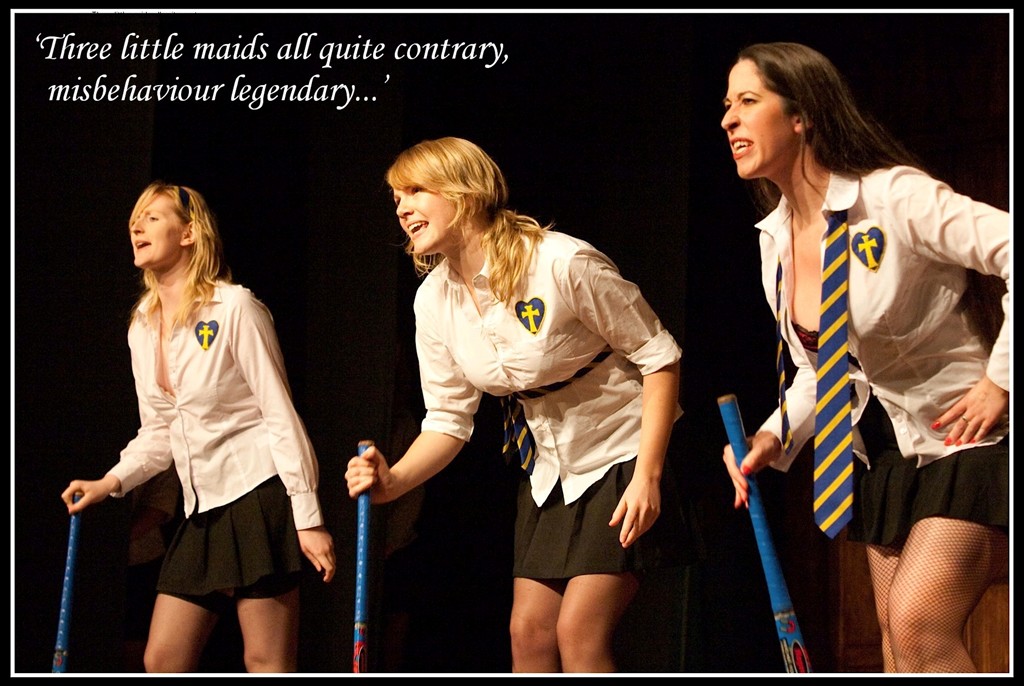
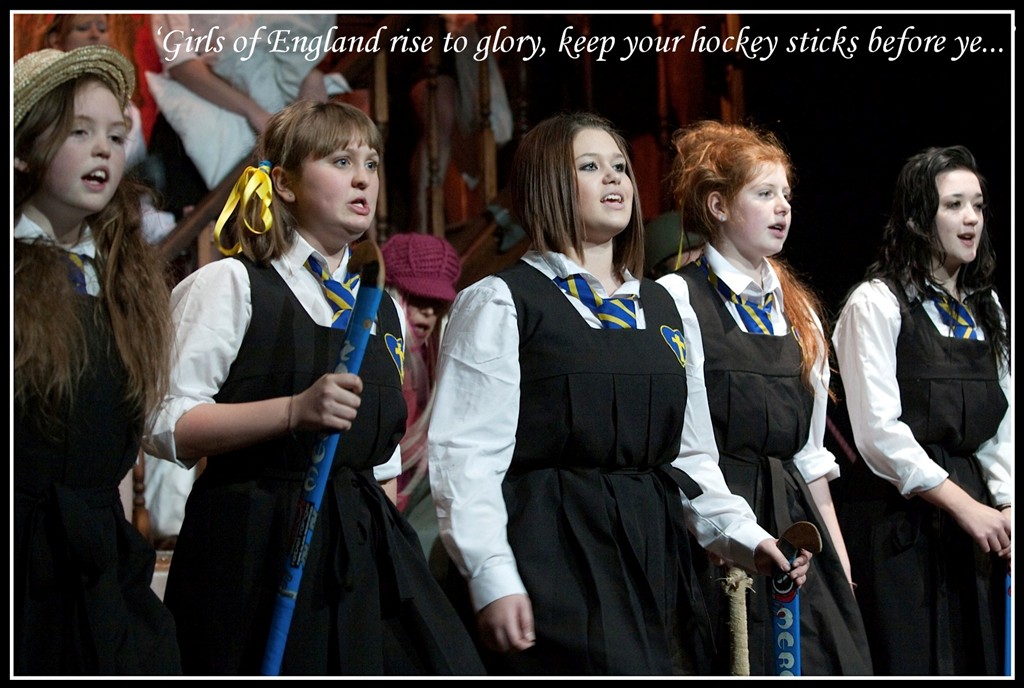
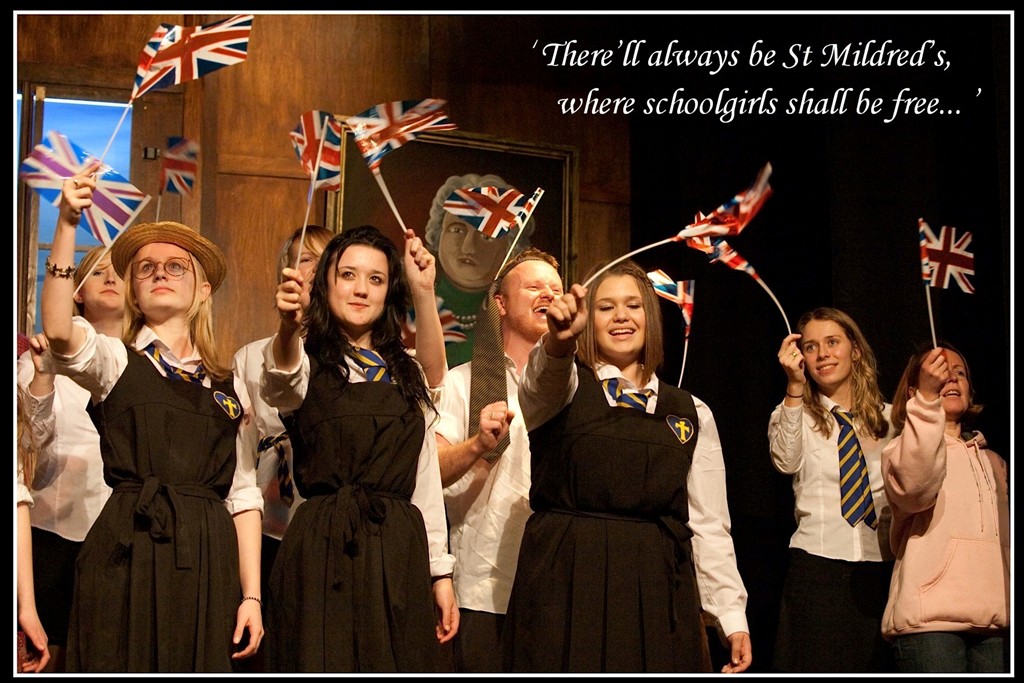
All the girls, whether fourth or sixth formers, enter into life at St Trinian’s with zest and their good voices offer new words set to many well-known tunes – I particularly enjoyed the ‘Three Little Maids From School’.
More complications ensue when the police infiltrate the staff room – Fiona Harrison is the intrepid Sergeant Bunty, who is mown down on the hockey field.
The panelled walls of the school building created an effective set and the frequent scene changes were well accomplished by an efficient backstage crew. Pianist Jonathan North tinkled the ivories for the songs assisted by Jeannie Lewis on percussion.
The large cast of twenty six share the satisfaction of a mystery comedy well delivered.
Theo Spring for The Croydon Advertiser
Other Productions