Jack The Ripper
About the Production
In the autumn of 1888, the East End of London was home to a sordid, brutalised community of prostitutes, immigrants, petty criminals and political renegades.
Potentially an explosive flashpoint behind the grand façade of Victoria’s London, the panic and terror that gripped the inhabitants of the slums and tenements during the series of murders attributed to the notorious ‘Jack the Ripper’ threatened to plunge the entire East End into riot and revolution, and shake the very foundations of the capital of the Empire.
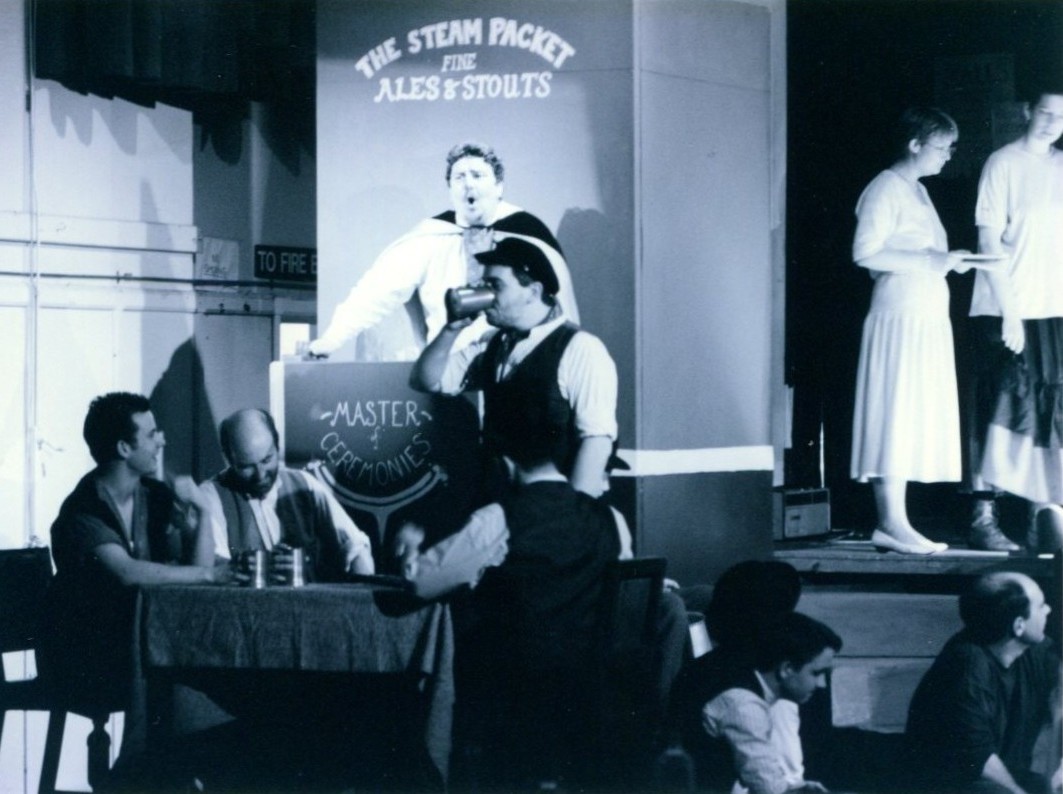
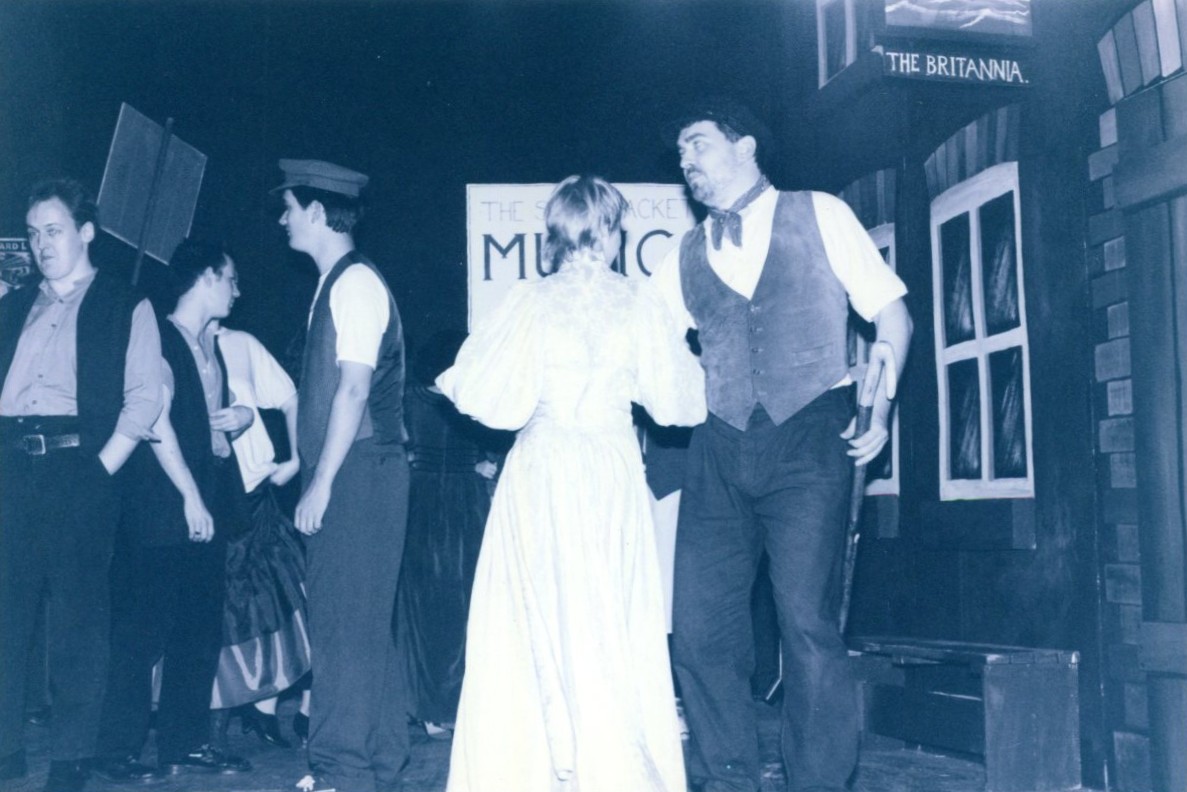
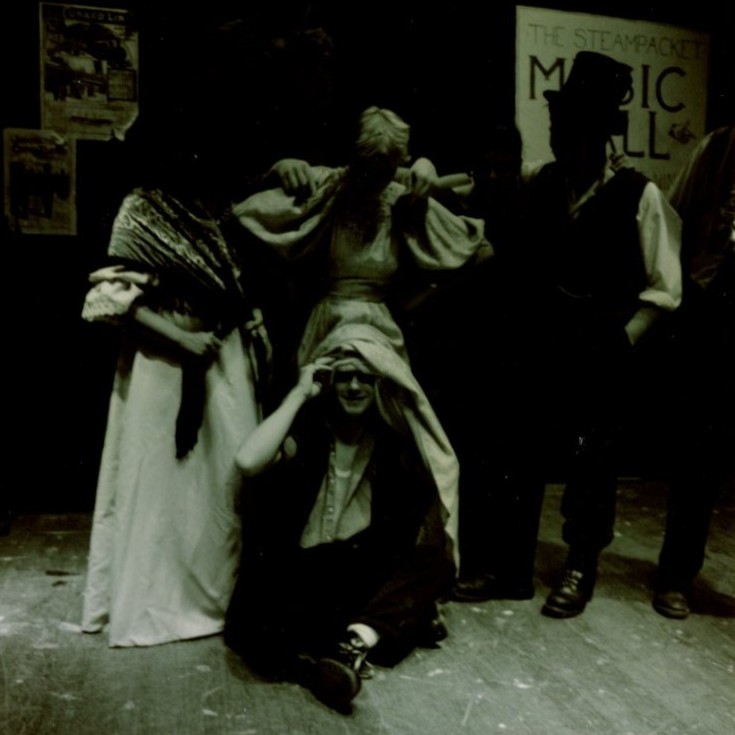
‘Jack the Ripper’ was written for the stage in 1974 and features a score by Ron Pember, with book and lyrics by Pember with Denis De Marne. A musical reconstruction of the incidents relating to the historic East End murders is told through the company of the fictional Steam Packet Music Hall in Whitechapel, a device that presents an atmospheric commentary on the murders as opposed to a historic re-enactment, with the ensemble moving between real and fictional characters.
The production was first staged at the Player’s Theatre in London, opening on June 25th 1974 It subsequently transferred the production to the Ambassadors Theatre in September 1974, followed by the Cambridge Theatre in February 1975, and earned a nomination for ‘Best Musical’ at the 1974 Evening Standard Theatre Awards. The show went on to debut in the United States in March 1979. Since the amateur production rights were released in 1976, ‘Jack The Ripper’ has remained a popular production choice with societies worldwide.
Ron Pember was a best known as an actor, with a career spanning several decades. He worked with both the National Theatre and the RSC and appeared in TV series such as ‘Only Fools and Horses’, ‘Red Dwarf’ and ‘Rumpole of the Bailey’. Coincidentally, he had a part in the 1979 film ‘Murder by Decree’ which starred Christopher Plummer as Sherlock Holmes, as the famous detective attempts to solve the mystery of Jack the Ripper.
The boisterous nature of the show, all rough edges and black humour, has a certain appeal to Theatre Workshop. We’d performed it before, back in 1983, when it was directed by Chris Argles. And we’d do it again, in the open-air, in 2006.

The Cast
Behind the Scenes
Image Gallery
The Reviews
On the knife edge of murder
A jolly, bawdy musical about such an unpleasant subject as the horrific mutilation and murder of a group of women sounded pretty tasteless to me. But Coulsdon Theatre Workshop won me over with their exuberant production of Jack The Ripper. They make a good stab (if you’ll excuse the grisly pun!) of recreating the characters who populated the sleazy backstreets and music halls of the East End of London in 1888.
Mark Hobbs directs with gusto and there is first class accompaniment from Mark Taylor at the piano, with some of the numbers enjoyably foot-tapping. The hideous killings by the fiend of Whitechapel and fear which stalks the whores who are his prey are here acted out within the framework of the Steam Packet Music Hall.
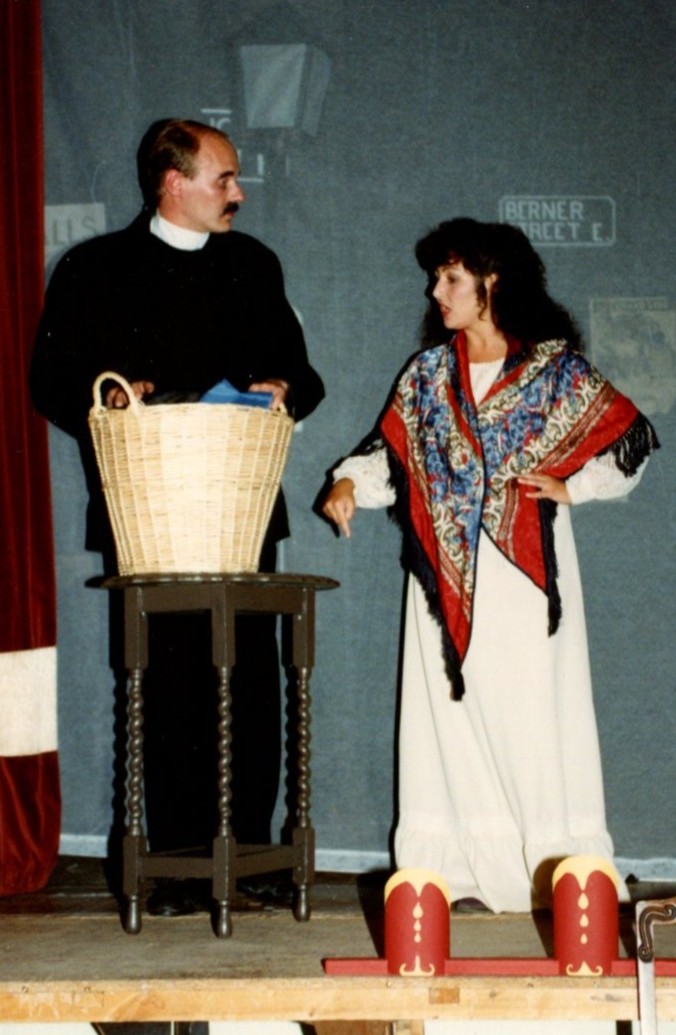
Richard Lloyd’s vivid portrayal of the girls’ hard-drinking pimp Daniel Mendoza sets the standard for the rest of the cast, dominating his scenes with earthy ribaldry and a hint of menace of the Bill Sykes variety. Tatiana Allison as Marie Kelly is a comely leading lady, a fiery little Scot with a pretty voice and a flair for melodrama. Her street-walking chums are well played by Rachel Handler, Kimberley Argles, Alison Illingworth, Lesley Argles and Louise Pennell, though they do look rather too clean and well dressed in some cases. Lisa Boniface is a bit too refined as Lizzie Stride, the woman who provides lodgings for the tarts at fourpence a night, but I liked her cameos as the music hall’s Queen Victoria.
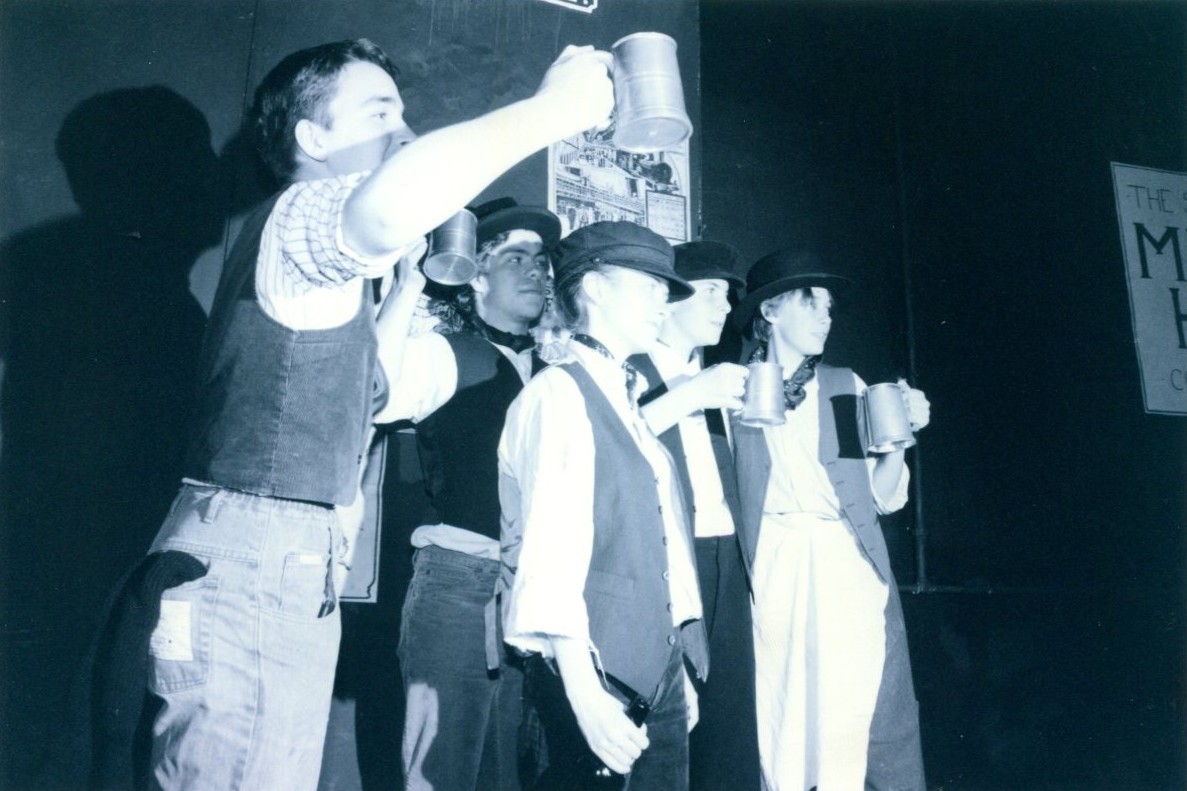
Bruce Montgomery gives a sinister presence to Montague Druitt, the do-gooder from Toynbee Hall who tries to get Marie to change her ways, while Tim Young is the jovial music hall chairman. Chris Argles, Robert Del Toro, Nathan Moughtin, Mike Brown and Paul M Ford are a suitably motley bunch of layabouts as Daniel’s boozing mates, rough and ready with the dirty remarks.
There is a good deal of attention to detail in the show, although one or two modern hairstyles are in evidence. And the company are particularly to be congratulated on some good singing.
Diana Eccleston for The Croydon Advertiser
Other Productions