R.U.R.
About the Production
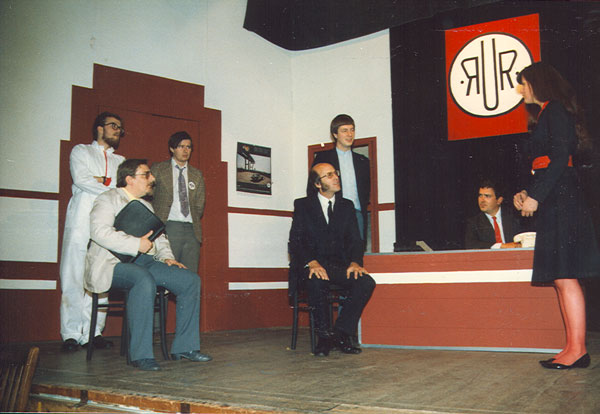
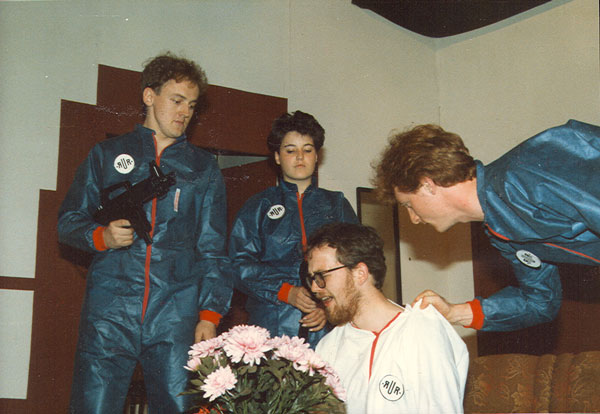
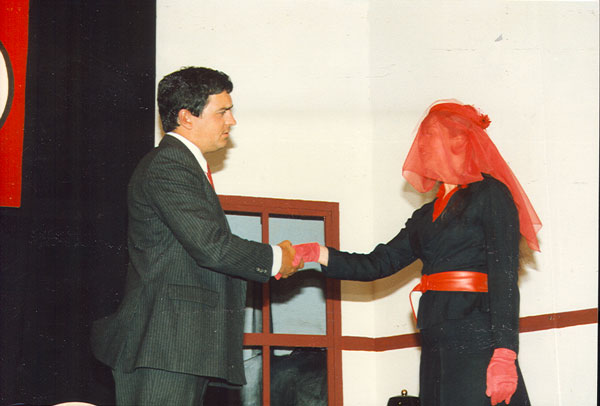
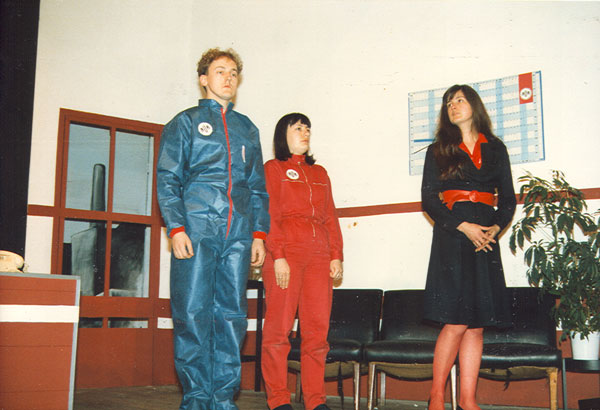
When idealistic young Helena Glory arrives at the remote island headquarters of Rossum’s Universal Robots (R.U.R.) with vague ideas about liberating the robots the company manufactures from their lives of enforced servitude, she is unprepared for what she finds. Overwhelmed by the almost evangelistic Harry Domain, she remains on the island, and inadvertently sews the seeds of her and mankind’s destruction…
Written by Čapek in 1920 and set at the end of the 20th Century, ‘R.U.R.’ premiered not on the stage in Prague as was originally intended, but with an amateur group in the far smaller town of Hradec Králové in January 1921. Ahead of its time in its depiction of human-like artificial beings, Čapek’s play introduced the word ‘Robot’ into the English language, derived from the Czech word ‘robota’ which means ‘forced labour’. In their creation, assembled from artificial bones, flesh and organs rather than mechanical parts, we would more likely refer to them as androids, or even (borrowing from Philip K Dick’s ‘Blade Runner’) ‘replicants’. The script was translated into English by Paul Selver later in 1921, and adapted for the stage by Nigel Playfair the following year, but it was far from faithful to the original. Many lines were cut, others added, a robot character removed entirely and his lines given to another. This version, or something similar to it, debuted in New York in October 1922 (featuring, in his Broadway debut, actor Spencer Tracy), and at St Martin’s Theatre in London in April 1923. Čapek complained that his original ending had been suppressed. It would not be until 1989 that a new unabridged translation, by Claudia Novack-Jones would actually appear,
Paul Ford’s first foray into directing also saw him tentatively try to adapt the script for a more modern audience. He started with a 1973 imported American edition of the script, by the Washington Square Press, of the Selver/Playfair adaptation and it was clear that what might have made sense in 1923 was jarring over sixty years on. (Dr Helman, practically the last man standing and desperately shoring up a barricade against the coming army of robot insurgents hears an explosion and says ‘The damned rascals, they’ve got bombs.’ with not so much as an exclamation mark to indicate shock or urgency.) Changes were made, but as the comments of the critic attest, he could have and should have been bolder in his alterations. However, the production did provide a showcase for the remarkable talents of Mark Taylor, who composed here a full original music score for the show, the first time he had done so, as well as performing on stage as Dr Gall.

The Cast
Behind the Scenes
Image Gallery
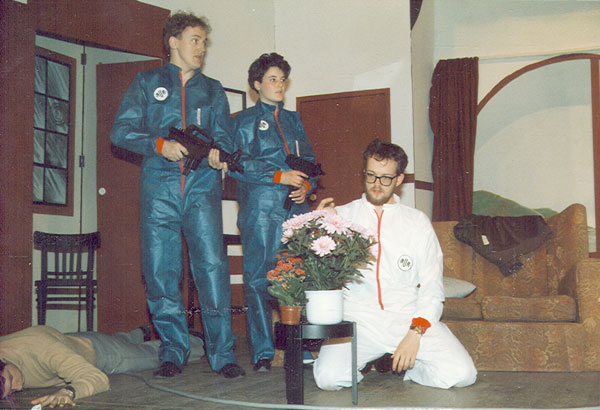
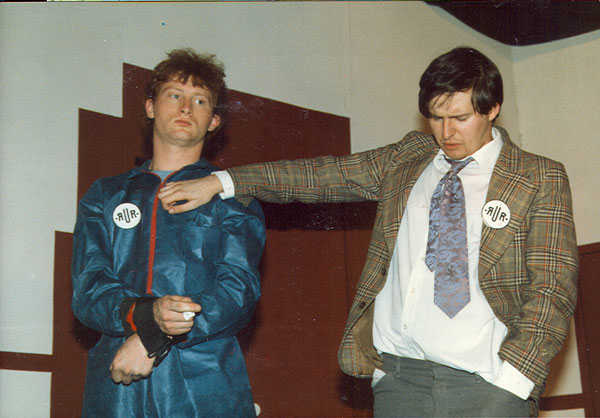
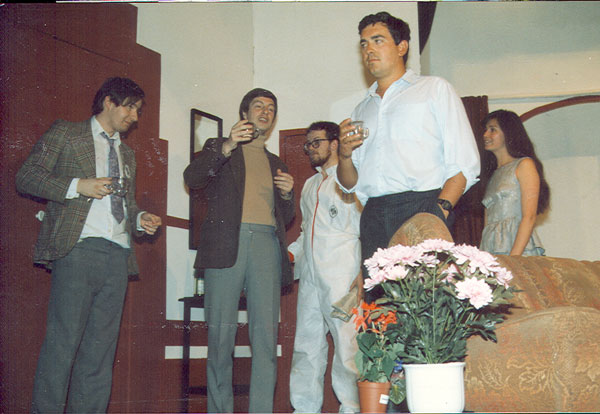
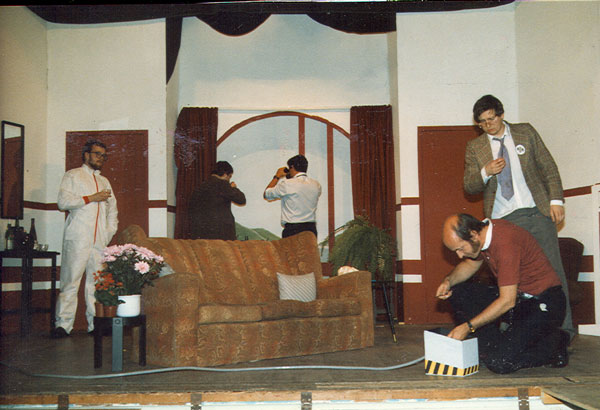
The Reviews
Historic Robots Run Riot
It is not quite a classic of the theatre but Karel Capek’s “Rossum’s Universal Robots” better known as “R.U.R”, remains much more than an historical curio. Dating as far back as 1921, it seems to offer a remarkably prophetic vision of the Nazi movement and the holocaust.
Mass-produced robots, made under a new life-imitating formula, arise to destroy their creators and establish a global tyranny. What was planned as a new utopia of cheap and abundant goods ends as a nightmare with the extinction of Adam’s race.
Theatre Workshop Coulsdon are presenting the play (further performances tonight and tomorrow) under the direction of Paul M. Ford, whose first production this is. It is an interesting and worthwhile venture, but one does feel his lack of directorial experience, particularly in the lack of tension at critical moments. The acting is generally competent, but suffers from slackness under pressure. When the news is announced that the robots have taken over the rescue ship and cut off out intrepid band’s last line of escape, someone says “That’s an ugly development,” as if England had just lost a wicket in the Test Match.
The performance I attended contained one of the longest and most agonising “dries” in my experience, ended by the arrival of a character with the deathless remark “How can you stand there and say such a thing?”
Sitting here, I am glad to say such a thing as that I am both pleased and grateful to have seen the production. For all my reservations, not the least of which is that I felt the old text badly needed pruning, it gave me more pleasure than many a slick production of a formula comedy. Richard Lloyd brought a robust quality to the role of Harry Domain, the General Manager, and there was an interestingly expressionistic style in the collective playing of his quintet of co-workers. In particular, Mark Outhwaite had the strength of desperation as Alquist, whose bleak message brings the play to its close. Christine Blake was rather limited in her range of reactions as Helena, whose humanitarian instincts prove so ineffectual, though I found her a most sympathetic character.
Best of the robots was Lee Wilkinson, while Simeon Dawes and Penny Simeone made a strong impression in the final act.
Donald Madgwick for The Croydon Advertiser, Friday July 3, 1987
Other Productions