The Arabian Nights
About the Production
For our inspiration, ‘The Arabian Nights’ draws on the 1001 tales supposedly told by Shaharazad (or Scheherazade). King Shahryar, having suffered at the hands of an unfaithful wife, has become bitter and vengeful, undertaking to marry every day, but execute each wife as the next day dawns to prevent their infidelity. Shaharazad, the clever daughter of the court vizier, volunteers to become his wife, to try and prevent the needless bloodshed. Every night she tells Shahryar a story that enthralls him, but deliberately leaves it unfinished come the sunrise, and so the King stays her execution. She does this again and again, for 1001 nights, by which point he renounces his violent ways and spares her life permanently.
In reality, the stories, which are many but nowhere near 1001, are taken from sources across the Islamic world. From Moorish Spain to the borders of China, across the Middle East, reaching as far south as sub-Saharan Africa and north to the Balkans and the Caucasus mountains. The fullest version of the 1001 tales was compiled, translated and edited by the eminent Victorian explorer, Sir Richard Burton, who had published a massive 16 volume edition in 1885. However, it remains only one of a dozen or so major retellings written across the 19th and 20th centuries.
Most of the stories are simple folk tales, a number sharing many similarities with folk tales from other cultures. Two of the tales (strangely enough, two of the most famous, ‘Aladdin’ and ‘Ali Baba and the Forty Thieves’) were almost certainly shoehorned into the collection at a late stage, bearing little resemblance to the story structure of the rest and differing in other aspects too.
For our production, we kept part of Shaharazad’s tale to frame the other tales we wanted to tell, a mere six against 800 or so we had to choose from. We’ve tried to cover a range, from the profound to the absurd, the sinister and the scary to the comic and just a little bit naughty. All human (and some non-human) life is here. Enjoy.
The tales are;
Ali Baba and the Forty Thieves
The Talking Head
The Simpleton and the Two Sharpers
The Little Hunchback
The Lady and Her Four Suitors
The Strange Tale of Sidi Nu’uman

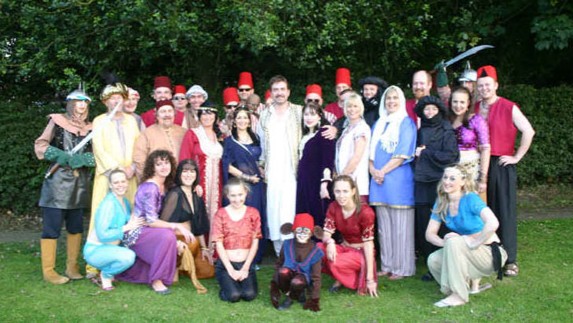
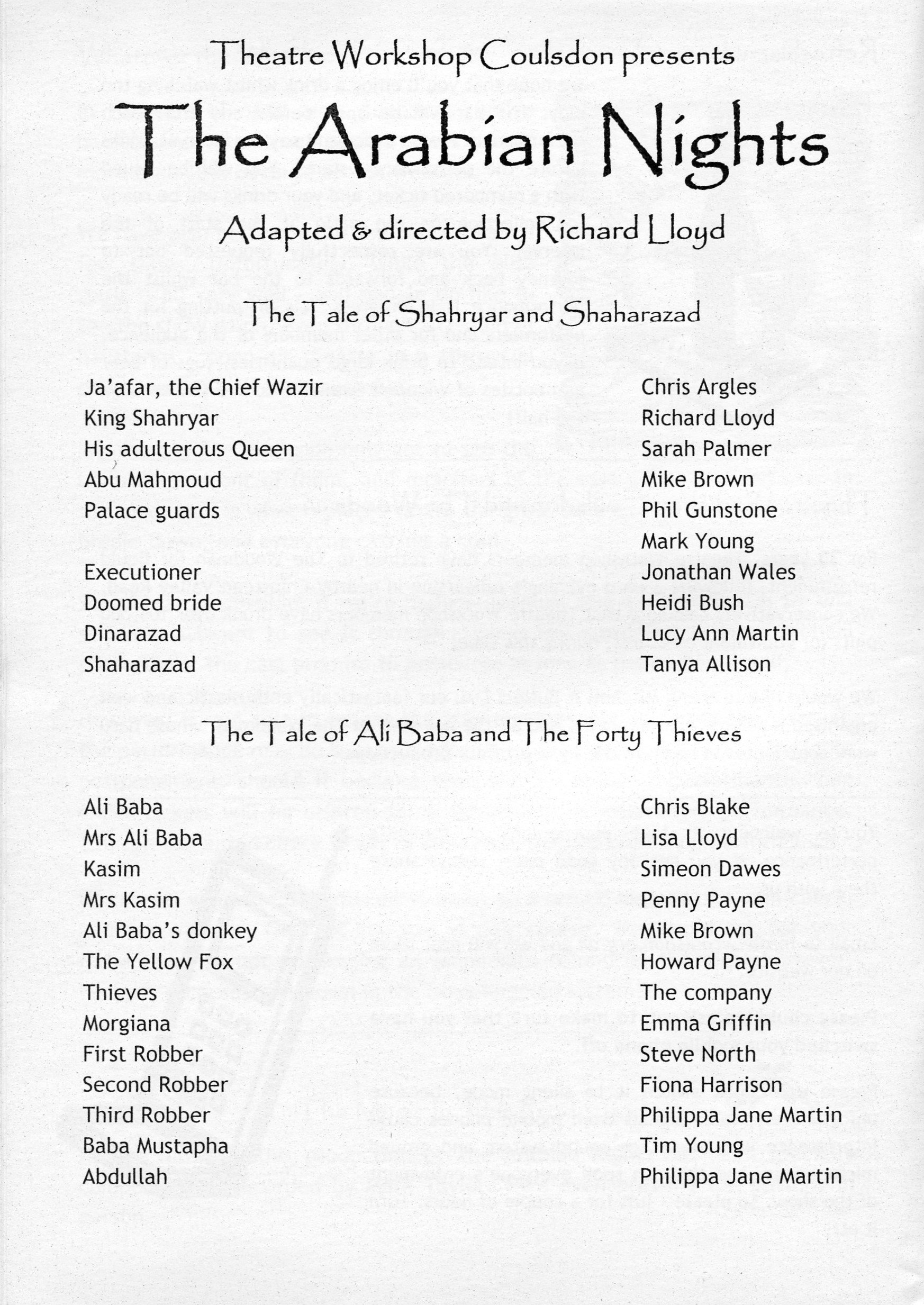
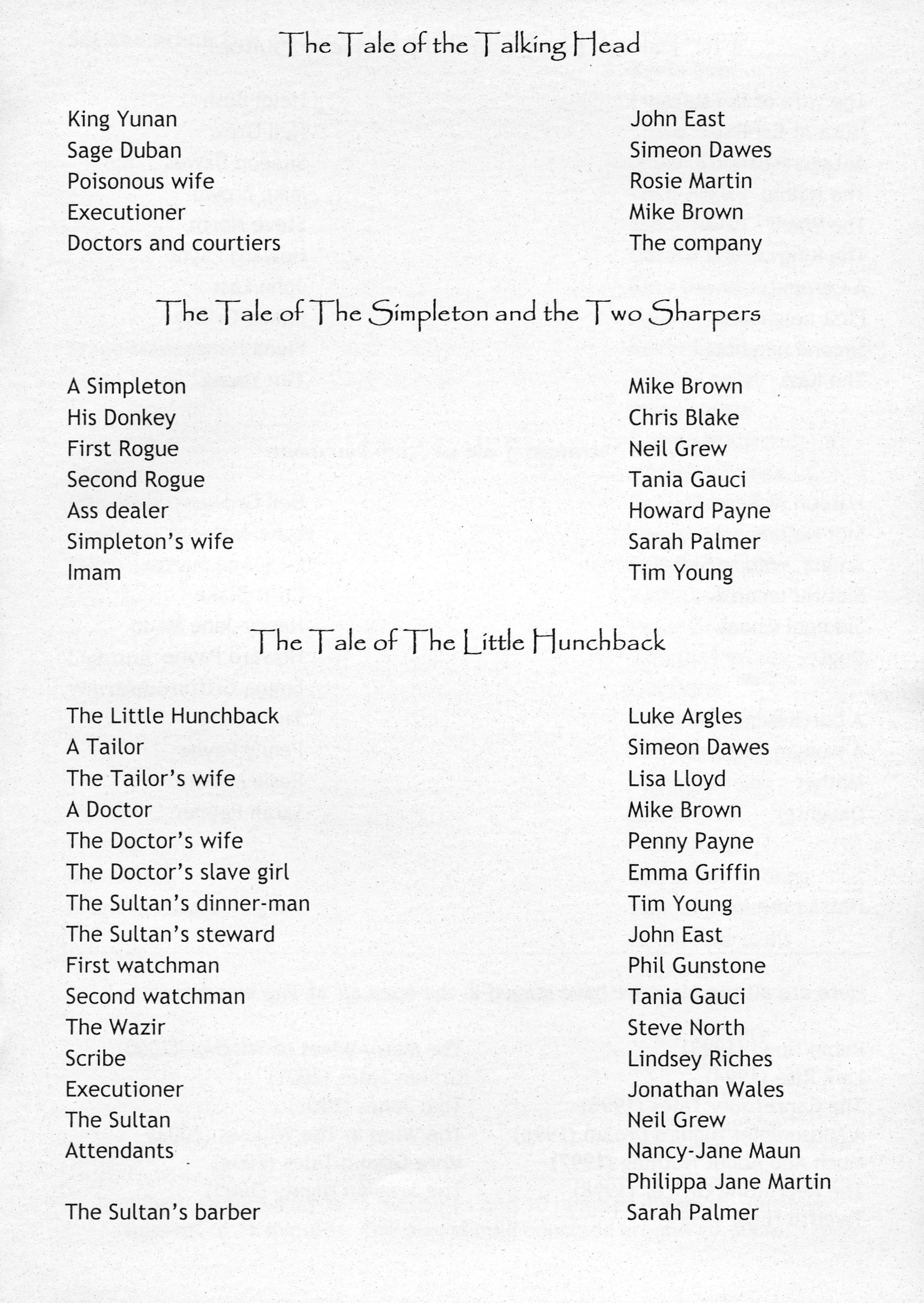
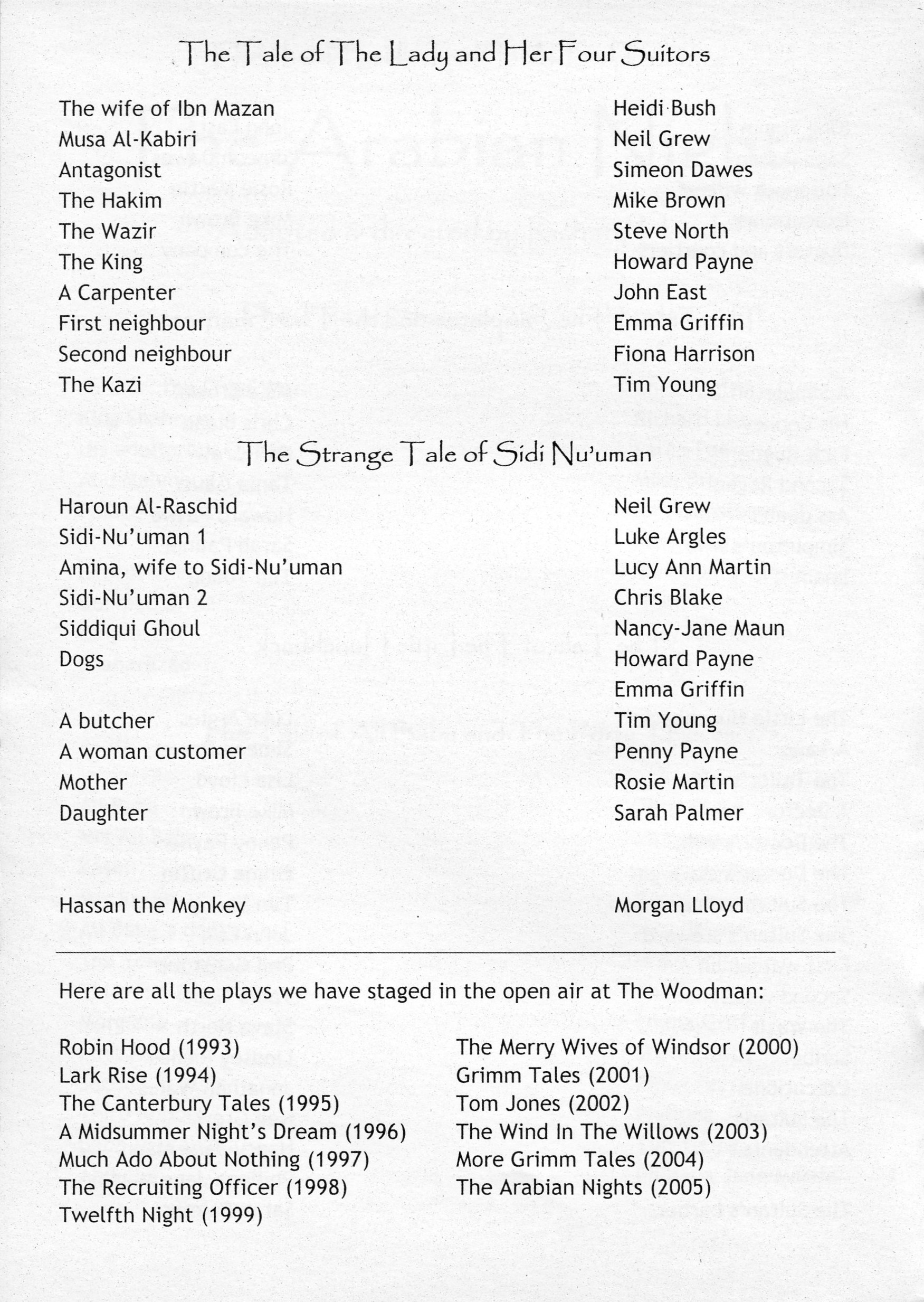
The Cast
Behind the Scenes
Image Gallery

The Reviews
Awarded Five Stars
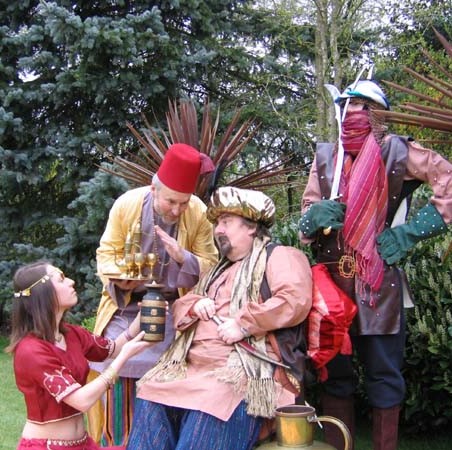
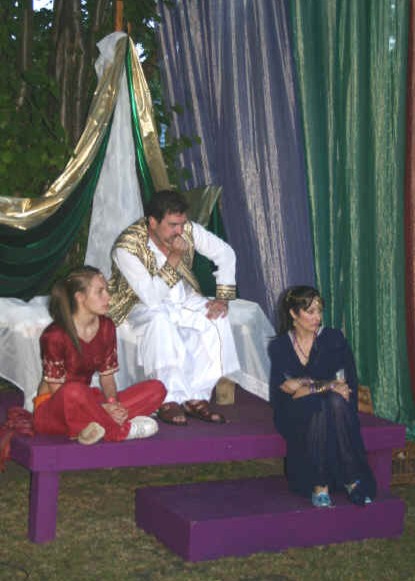
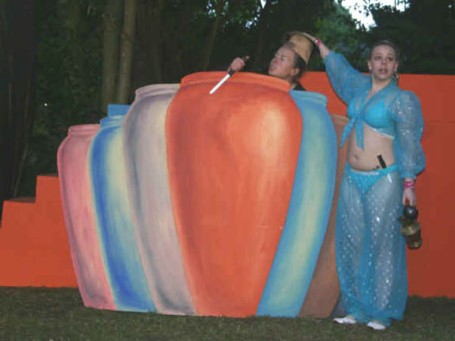
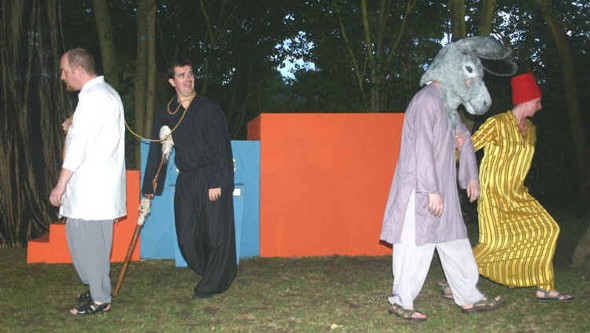
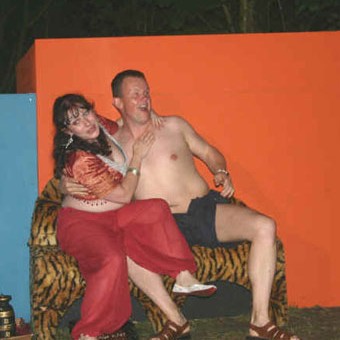
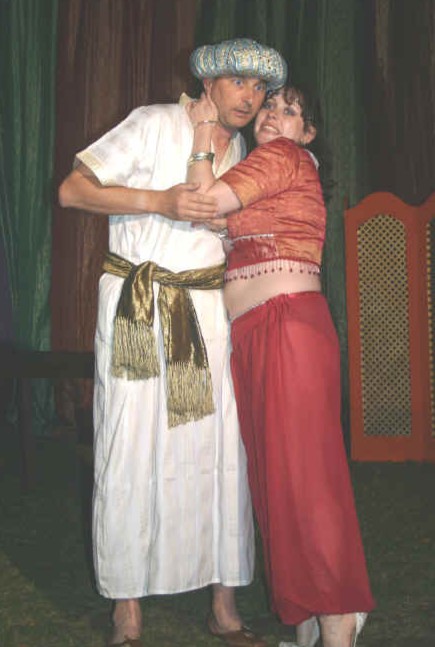
Worth six stars, were I able to award them, this collection of stories culled from the theoretical 1001 are gruesome, bawdy, sad, comical and thought-provoking, so something for everyone. Performing in the open air at The Woodman, Woodmansterne, since 1993, these productions are now part of summer’s drama treats. Staging is sumptuous – colourful cloth swaths provide the backdrop; costumes are richly trimmed with shimmer and sheen gaining full marks for wardrobe team of five. Props are brightly painted and constructed with thought and care with a particular mention for the huge cabinet (enough to take four men), which is a major work, and the lamp oil pots. No surprise that a team of ten were responsible for these and many more.
Richard Lloyd’s direction kept the essence of the east while introducing accents from England in dialogue between the poorer families, while talk in the palaces was upper crust. Seven tales are told in all with the first setting the scene as to why Shaharazad needed to conjure them up to save her neck and mend the heart of the bloodthirsty King Shahryar. Tanya Allison as Shaharazad story-told her way through the production magnificently – a very demanding role professionally executed (no pun intended!) With so many to cast, doubling was a must, even the twice-used donkey with its realistic head used different actors. Howard Payne created a wickedly evil Yellow Fox, ad-libbing as his “forty” thieves tire as they repeatedly ran a circular route off and on stage. Emma Griffin is the cheeky servant girl Morgiana who has wit as well as charms and her acting talent later found her as the gormless slave girl commanding a very different role. As Kasim and later Sage Duban, Simeon Dawes went from frivolous to wise, cleverly using potions as the sage and Penny Payne did wifely duties to Kasim and the Doctor – firstly as a shrew and secondly as a partner in crime. Chris Argles opened the production as the Chief Wazir, father, as we discover, of the threatened Shaharazad.
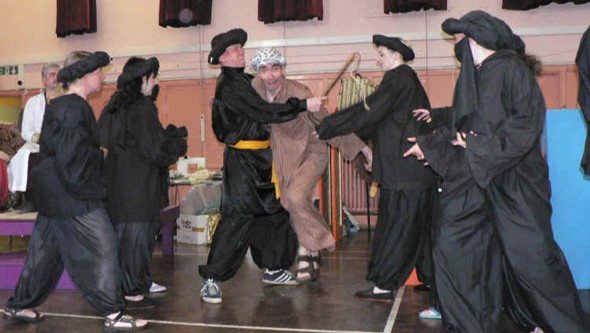
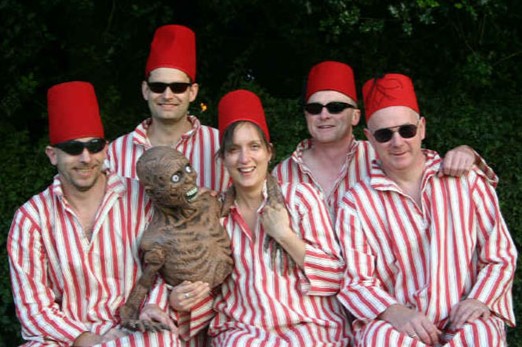
The logistics of getting everyone in the right costume and to the right entrance do not bear thinking about, but the thieves were right there, in the trees, ready to ride up and “Open Sesame”, the scene shifters in their stripy robes and shades looked part of the action and the tales themselves are intriguing. Mark Taylor is the musical magician who composed the emphatic score and lighting by Jonathan Wales brings the wide set to life. Did I say we had a light drizzle almost throughout the show? It takes more than that to thwart a British audience who are being entertained so royally, and a cast who ignored the weather and gave their all. Do go, I urge you, but take a chair, rug and rain gear – just in case. Performances until 6th August.
Theo Spring for The Croydon Advertiser, Friday 29 July 2005
Other Productions