The Canterbury Tales
About the Production
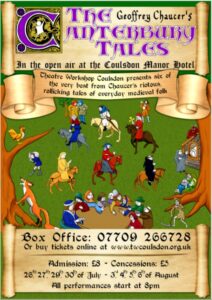
Geoffrey Chaucer (c. 1340 – 1400) has been called the father of English Literature. Certainly there is nothing quite like his epic ‘The Canterbury Tales’ to put the present-day observer in touch with the ordinary life of our medieval forebears. Nothing to match the unflinching realism of Chaucer’s portraits of his fellow men. And nothing quite so effectively holds up a mirror, not only to the England of his times – but to the unchanging nature of human experience.
We considered four different published playscripts before creating our own adaptation of ‘The Canterbury Tales’. In the end we decided against paying royalty fees to use someone else’s script. After all, Chaucer is part of our shared heritage – his words should belong to all of us.
Across the different playscripts there had been a range of selections made regarding which tales were best to tell. Clearly, given that there are 28 tales in all, you can’t use all of them in one two hour show (and note that Chaucer had intended for there to be 120!), so a choice has to be made. However, most seemed to go for the stories with classical settings, such as The Knight’s Tale, The Franklin’s Tale and The Merchant’s tale.
Focused on the nobility, and concentrating on stories of courtly love and mortal combat as they are, we decided that these rarified tales were not the ones we wanted to tell. We wanted to hear from the ordinary people, engaged in the medieval day-to-day of simple pleasures, petty jealousies and mundane squabbles. Exuberant and resilient folk, yet dominated by an overbearing Church. So, these are the stories we chose:
The Nun’s Priest’s Tale
The Wife of Bath’s Tale
The Friar’s Tale
The Pardoner’s Tale
The Miller’s Tale
The Reeve’s Tale
Our adaptation is actually based on the 1985 Oxford University Press translation by David Wright, though we’ve edited out much of the narrative in favour of dialogue. This is a drama after all, not a story telling, and that has meant some minor amendments in order to make sense of the editing. Regardless, we’ve actually added or rewritten very little. So the words you’ll hear spoken are Chaucer’s own, translated with fidelity into modern English by one of the foremost scholars in this field. If you take any pleasure from the tales we unfold for you today, reflect for a moment on the fact that these are the same stories that entertained your ancestors, some 600 years ago.

The Cast
Behind the Scenes
Image Gallery





The Reviews
Company Celebrate With A Winning Tale
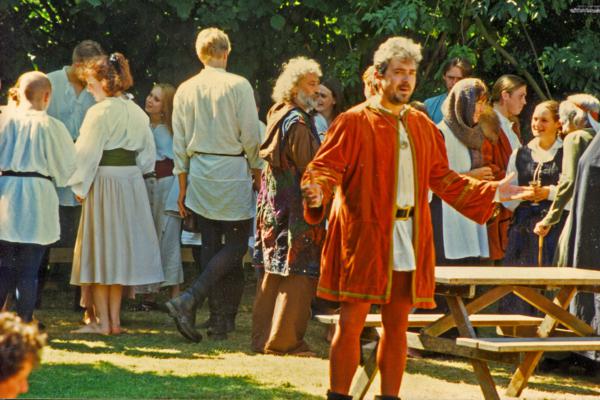
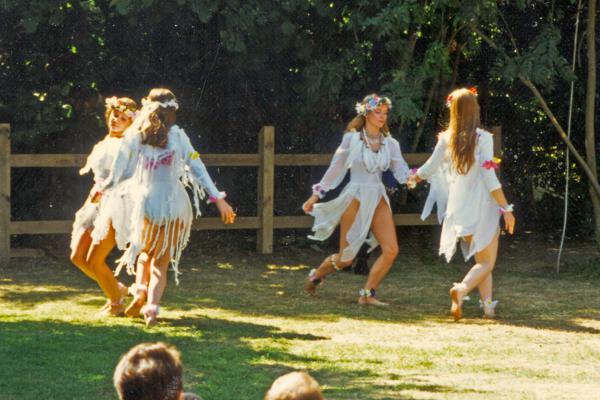
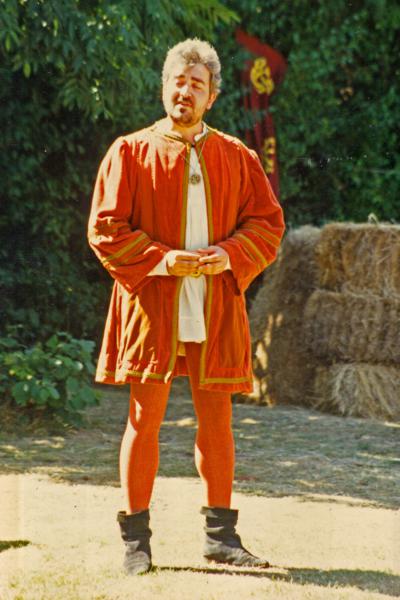
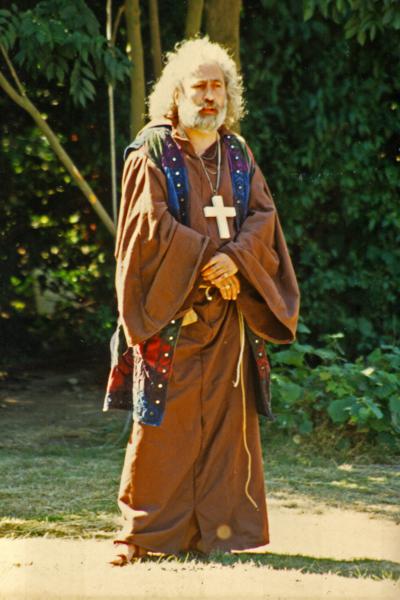
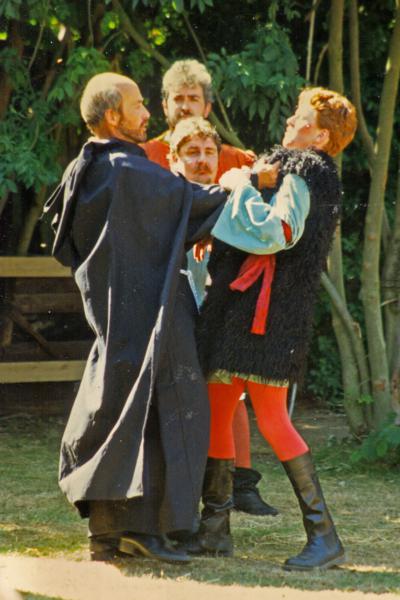
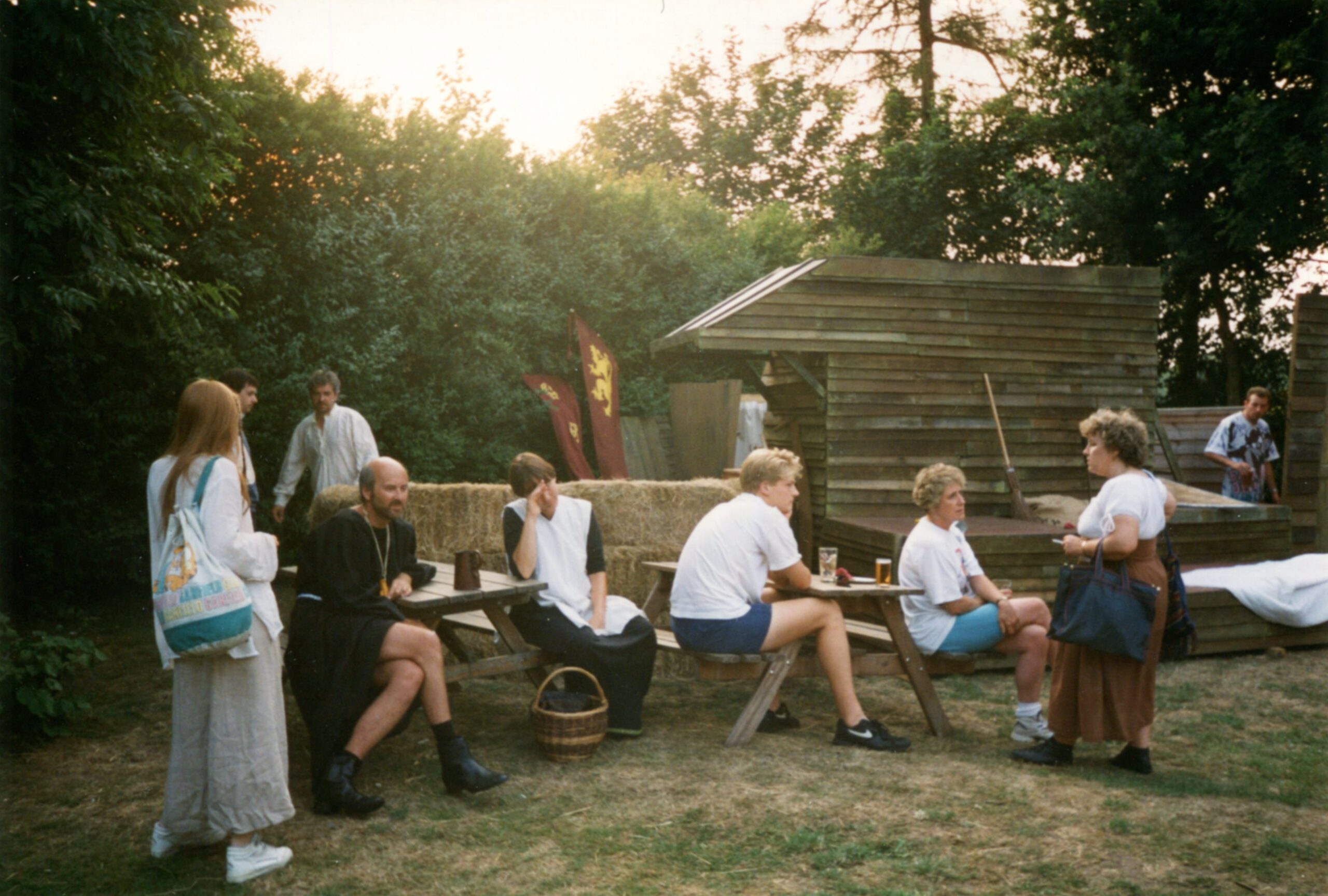
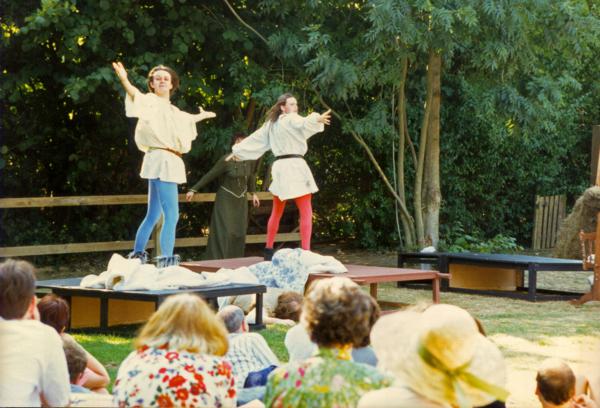
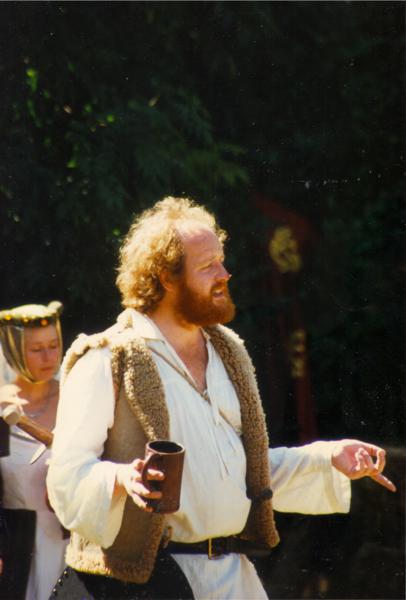
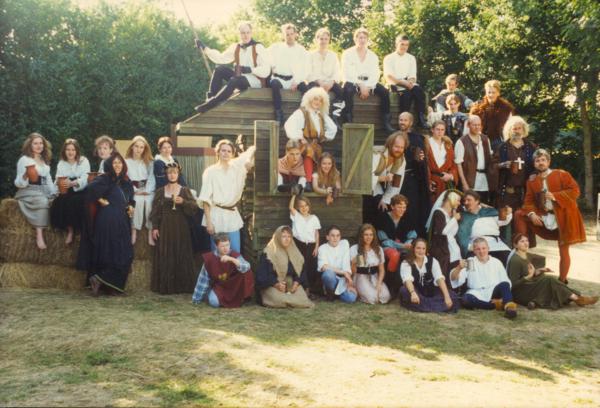
The Woodman pub at Woodmansterne is the place to be this week, as Theatre Workshop Coulsdon celebrate their 25th anniversary in its gardens in splendid style, with an open-air production of a great English classic. The adaptation is by their very own bard, Richard Lloyd, who not only directs but also, fittingly, plays Geoffrey Chaucer himself.
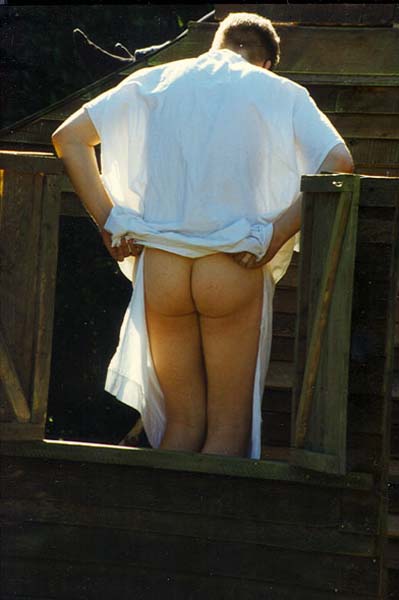
This is a show that gets better and better as it proceeds, ending in a riot of rudery with a couple of likely lads from t’north in flagrante delicto with the Miller’s wife and daughter. Mr Lloyd has perhaps remembered Polonius, who was “for a jig or a tale of bawdry, or he sleeps”. No danger of slumber here, as the company build up to their climax with the Miller’s own hilariously windy tale of the scholar and the carpenter’s wife. Were we not already under the starry vault of heaven, it would bring the roof off with a clap of thunder. The standard of speaking and declamation is variable, but the best of it brings lustre to Mr Lloyd’s racily colloquial text.
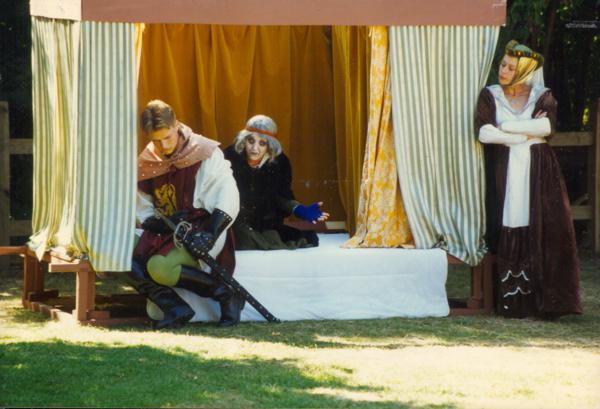
Tim Young neatly blends geniality and testiness as Harry Bailey, convivial host of the Tabard, who accompanies the pilgrims and coaxes their tales out of them. The best and clearest of the narrators he calls on are Bruce Montgomery, a Reeve to remember; Mike Brown’s harum-scarum Miller; and Lisa Lloyd, wonderfully suggestive with her West Country burr as the much-married Wife of Bath. The last-named contributes an ancient tale of doubtful chivalry featuring James Crouch as an over-ardent Knight, and a performance of magical mystery by Tina Bretman as the Hag who alone knows what it is that women most desire. The same actress proves her point in the last tale, as the wife who gets her student. For TWC’s patrons this production, which marks their 25th anniversary, is one not to be missed.
Donald Madgwick for The Croydon Advertiser
Other Productions