The Crucible
About the Production
Arthur Miller’s ‘The Crucible’ is one of the classics of 20th Century theatre. A fictionalised (or at least in part) account of the witch trials that took place between 1692 and 1693 in the small settlement of Salem, in the Province of Massachusetts Bay, New England. Miller wrote it in 1953 not as a historical piece, but as an allegory for McCarthyism, rampant at the time of his writing, where people were shamelessly persecuted for alleged Communist ties, without evidence. The accusation in and of itself was considered damning enough regardless of its origin, and there was the link to that earlier, dark time.
At best, ‘The Crucible’ was an ambitious reach for Workshop, but this was a ‘troubled’ production, as they call it in some circles. Originally slated to be the Spring 1990 production, it had been proposed by Christine Blake and Wendy Cole, who, it was intended, would co-direct. However, the project was almost completely derailed when both of them left the group. This left Paul Ford, who had been drafted in as an assistant director, to carry on in their stead but with no real vision for what the show should look like. One of the immediate difficulties was the presence in the cast of the key character of Tituba. Although her ultimate origin is disputed, it was thought that she was Barbadian, i.e. from the island of Barbados. No-one in the existing membership of the time could pass themselves off as such, and even in 1991, ‘blackface’ was a no-go. And so Paul elected to shift the entire thing into space. Salem became a settlement of puritan theocratic colony on a planet orbiting a distant star. It covered off the Tituba problem, but of course caused others.
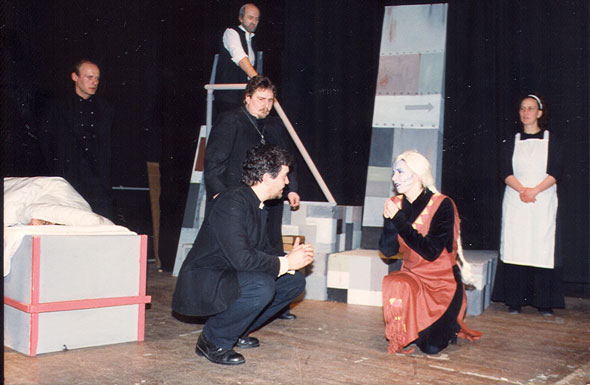
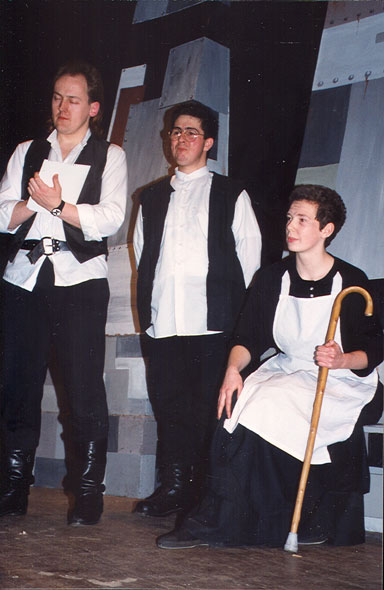
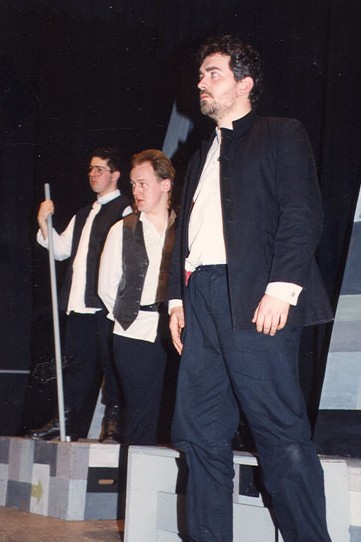
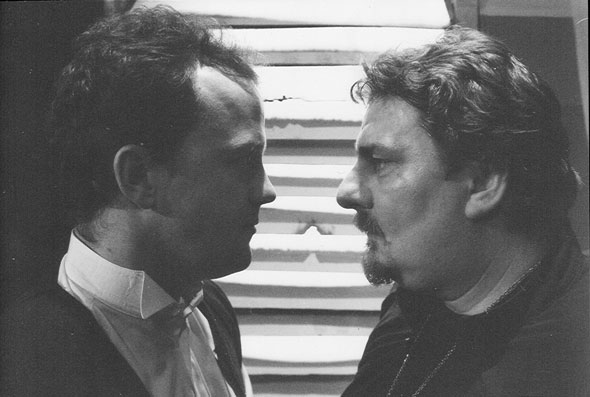
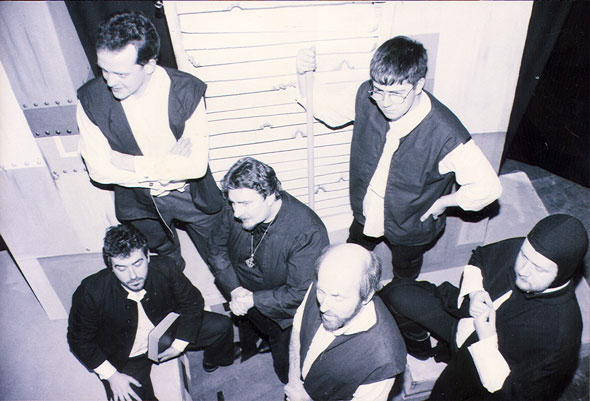
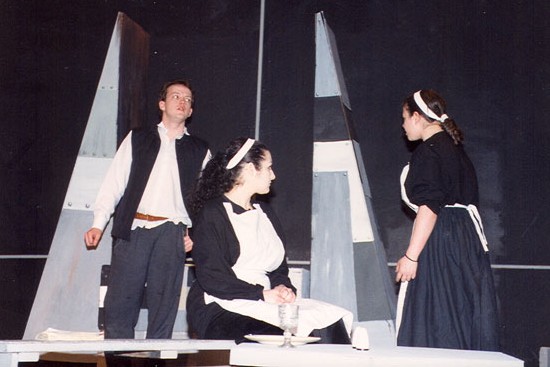
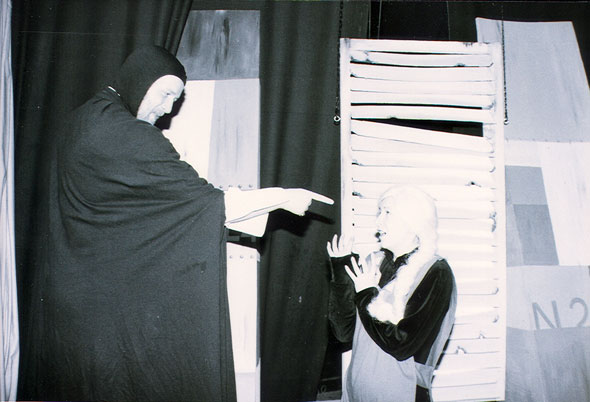
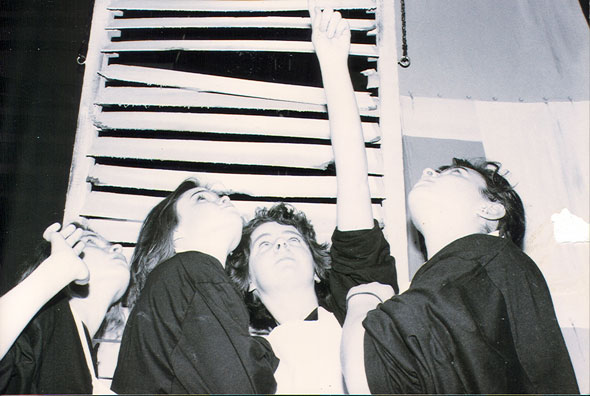
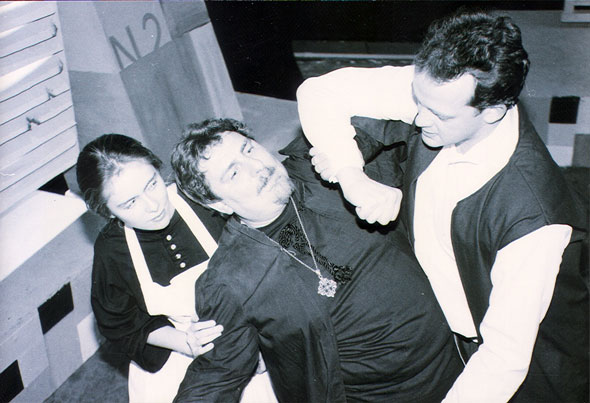
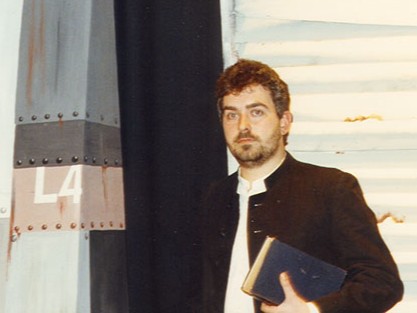
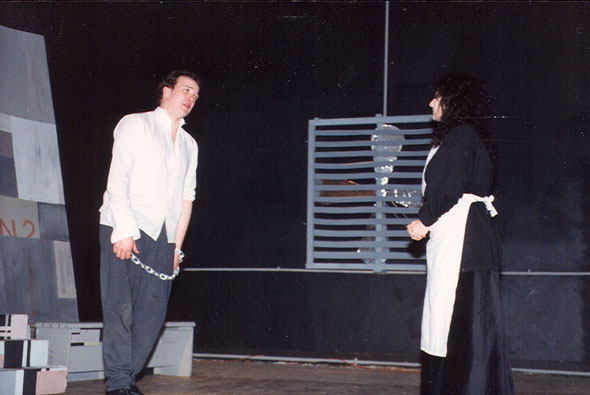
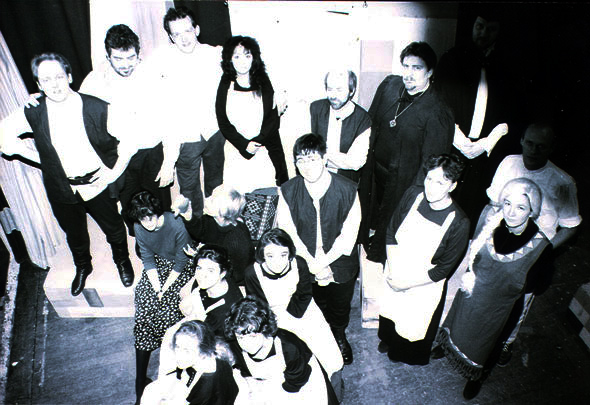
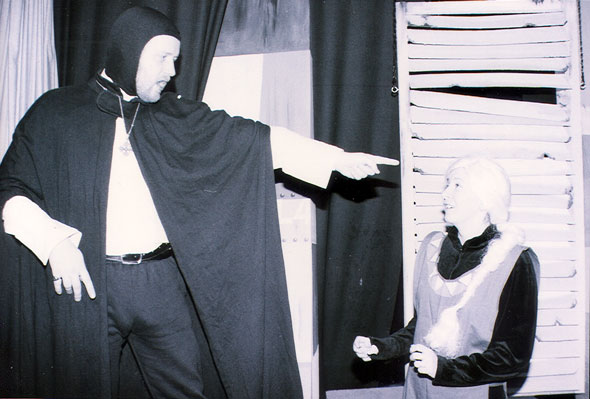
The staging was abstract, geometric shapes painted to look as if they’d been scavenged from old starship hull-plating. They could be moved to form different combinations, which would represent various rooms and locations. An over-sized fan behind a grill turned throughout, with a ever-present ‘tic’ as its malformed blades hit the grill.
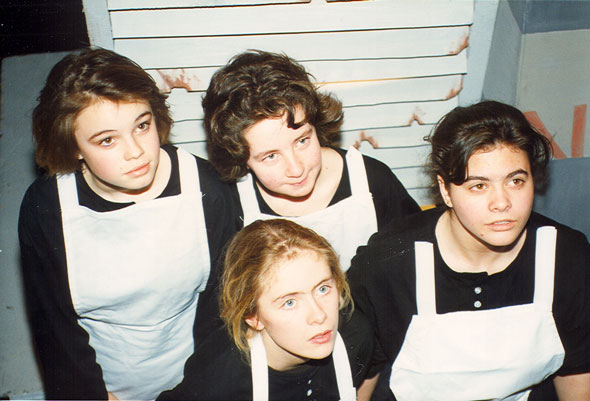
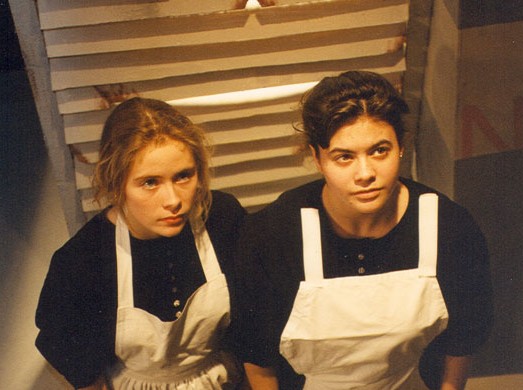
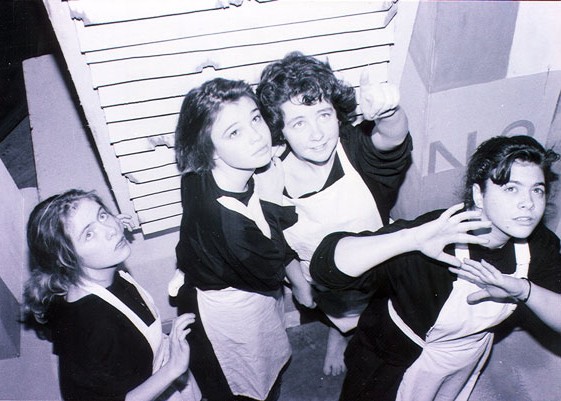
Despite some eventual outstanding performances, not least from the young girls in the cast, it nearly didn’t make it. The first weekend’s performances were billed as ‘previews’ as even at that last stage, the production was not pulling together. The review picked out that there were beautiful moments, and as ever, Madgwick was right. When it worked, there were some truly excellent scenes, but overall it really didn’t do the script justice.

The Cast
Behind the Scenes
Image Gallery


The Reviews
Beautiful moments on another planet
In the theatre, the longer the evening, the greater are the talents needed to sustain it. Arthur Miller’s The Crucible makes for a longish evening. So what shall we say about the production by Theatre Workshop Coulsdon, of what is arguably the best play of America’s greatest living playwright? Perhaps I cannot do better than quote Rossini on Wagner; beautiful moments, but bad quarters of an hour.
It seems to me, to being with, that a fundamental misconception underlay Paul M Ford’s production. Whether the programme was perpetrating a heavy joke or not I do not know, but it informed us that the sphere of action was not New England in the 17th Century but a “settlement of an off-world Colony” with a planetary environment similar to Earth’s. Well, well, you could have fooled me.
The set was studded with platforms and wedge shaped blocks bearing geometrical patterns, which may or may not have had extra-planetary significance. The ladies were mostly dressed like Victorian domestics. An electric fan cooled the Courthouse, and naked bulbs were visible. And Deputy Governer Danforth was played by a woman – Rebecca Ford in her most harpyish vein – who was variously addressed as Danforth, Miss Danforth, Excellency, Judge, Sir and Ma’am.
Otherwise we were, or may have been, in Salem, Massachusetts, in the 1690’s, with the Witches’ Award for Overacting going comfortably to Tim Young for his blubbering, blustering portrayal of the Rev. Samuel Parris. ithout the off-world colonial gimmicks, and with a more consistent dramatic direction, this could have been a notable evening in the theatre. But the passion was felt only intermittently, most notably from Paul M Ford himself as a fierce Ezekiel Cheever, and in some impressive flights of rhetoric by Mark Outhwaite as the admirable John Proctor, who, however, while lying shackled in his condemned cell, managed to keep his linen remarkably spotless.
Donald Madgwick for The Corydon Advertiser
Other Productions