The Recruiting Officer (1998)
About the Production
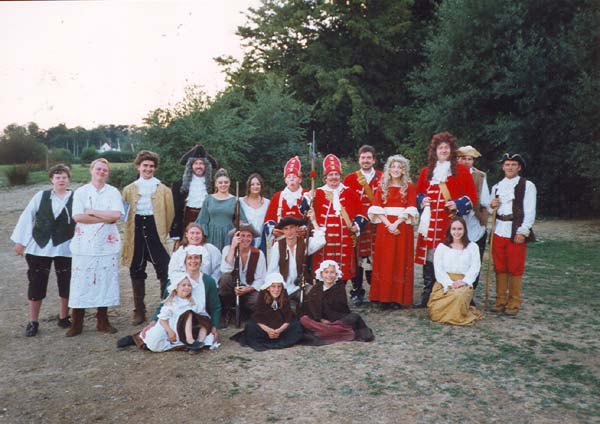
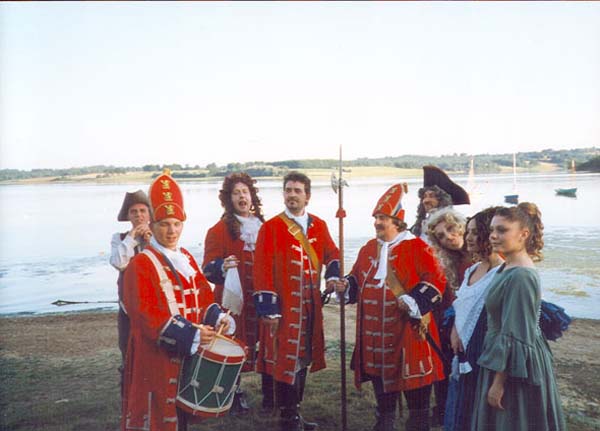
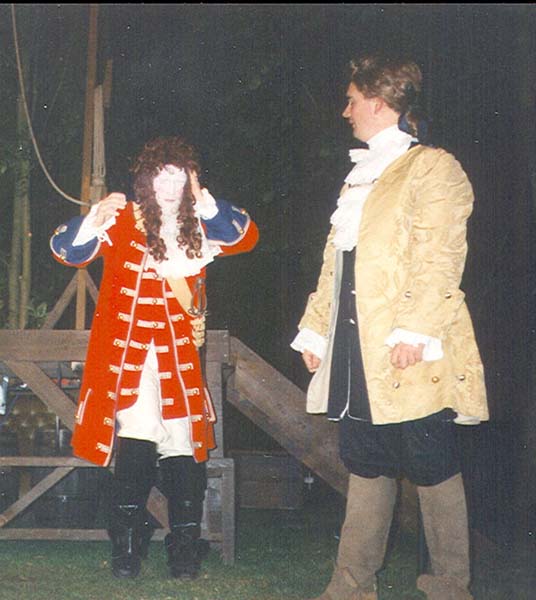
Written in 1706 by Irish writer George Farquhar, ‘The Recruiting Officer’ is a comedy set in and around the town of Shrewsbury in Shropshire. As the War of the Spanish Succession rumbles on in Europe, two recruiting officers, the womanising Captain Plume and the effete and cowardly Captain Brazen, attempt to entice the men of the town into the army and the women into their beds. Plume has an advantage here, for on his side is the redoubtable Sergeant Kite, who will use any means, fair or foul, to get men to join up.
Life is complicated by the women in their lives, who are far more independently minded, and smarter, than they can honestly cope with. Plume is promised to Sylvia, the daughter of a local Justice, Balance, but he’s also the father to a bastard born of a local girl, who Sylvia knows about and is caring for. Melinda, Sylvia’s cousin, was the amour of Plume’s friend Worthy, but he refused to marry her and instead proposed that she become his mistress, because she was too poor. Now she’s inherited a fortune, he’s back, but Melinda’s going to have a little fun with Worthy, by playing up to Captain Brazen. And then there’s Lucy, Melinda’s maid, who by subterfuge intends to wed Brazen too.
Hidden motives, trickery, miscommunication and disguise, all go towards making this boisterous romantic comedy laugh out loud funny, and it’s been doing it for over 300 years. It was the first play ever performed in New York City, at the Theatre on Nassau Street, on 11 December, 1732 (by amateurs too!). However, Farquhar didn’t benefit from its success. Heavily in debt and made ill with worry, he died in April 1707, not two months after the debut of his last play, ‘The Beaux Stratagem’.

The Cast
Behind the Scenes
Image Gallery
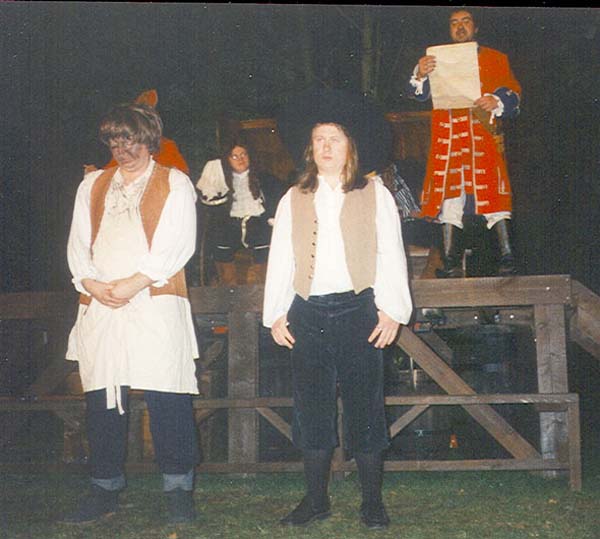

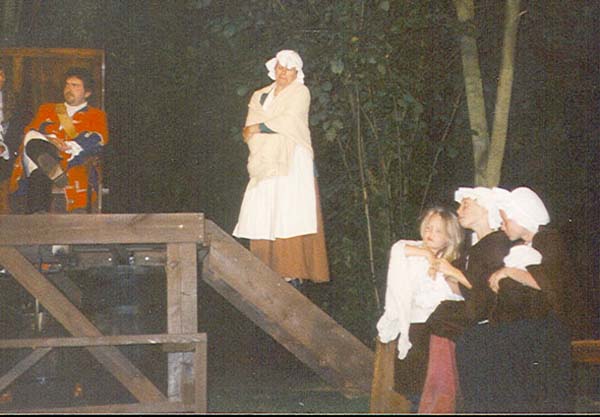
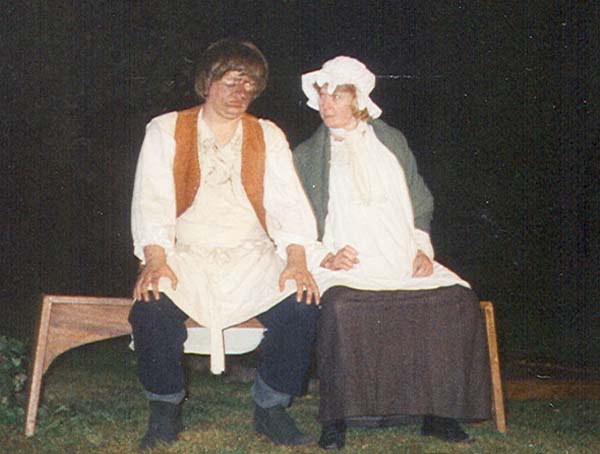
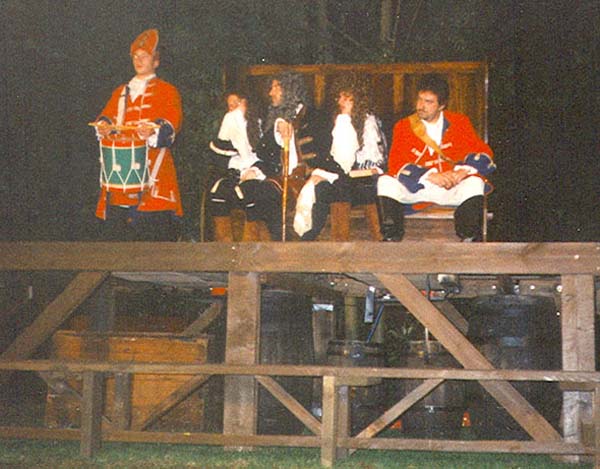
The Reviews
George Farquhar’s Restoration comedy, so called, actually belongs to the reign of Queen Anne, who herself had been preceded by four Post-restoration monarchs and the Glorious Revolution of 1688. But why bother with labels when we can just sit back and enjoy a play as socially perceptive as it is witty, in a production as bouncy and exuberant as Richard Lloyd’s.
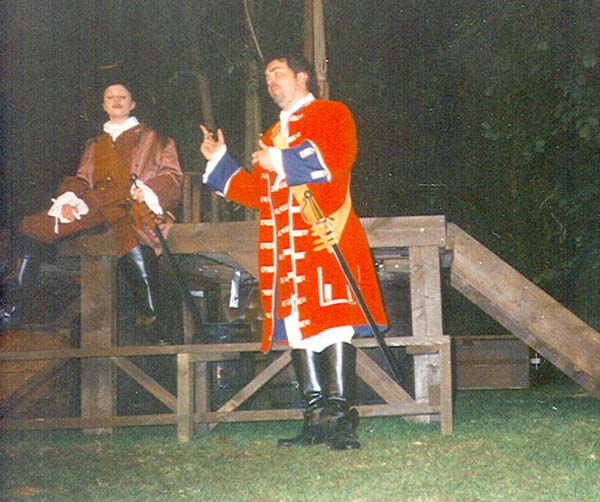
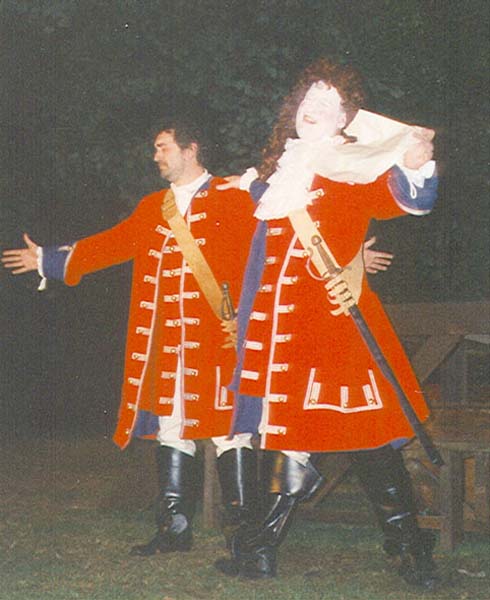
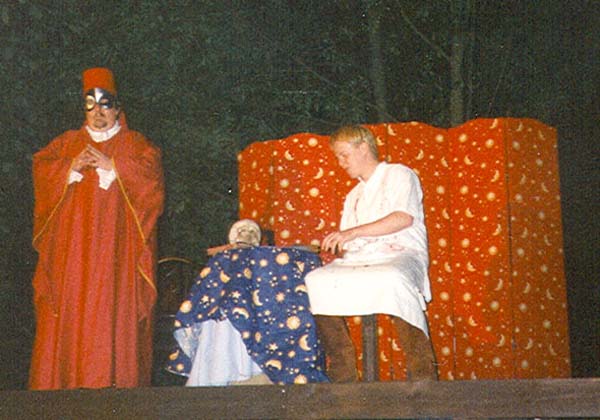
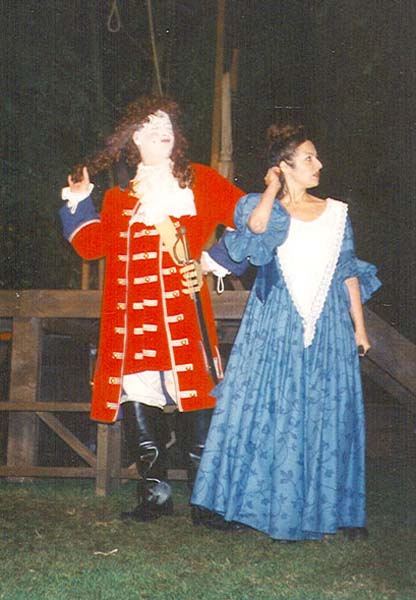
This is the second time the company have had a passage of arms with Farquhar’s play. In 1992 they did well with the facilities of their own premises. Now they have gone one better, making intelligent use of the expansive open-air setting and atmosphere of The Woodman pub, Woodmansterne. The meticulously researched programme notes give a full historical background to play and author, even providing a glossary of such period colloquial terms as March beer and humming ale. Costumes are of the highest standard, and the mere wearing of them seems to bring out in the cast a spirit of dash and devilment. And none more so than in Tim Young who, as the earthy, rascally Sergeant Kite, gives as accomplished a performance as I have ever seen from him. He gets right inside the skin of the resourceful rogue, carrying out his superior’s designs even to the extent of impersonating, in a bizarrely effective scene, an itinerant fortune-teller (Copper Knickers for Copernicus; what next?)
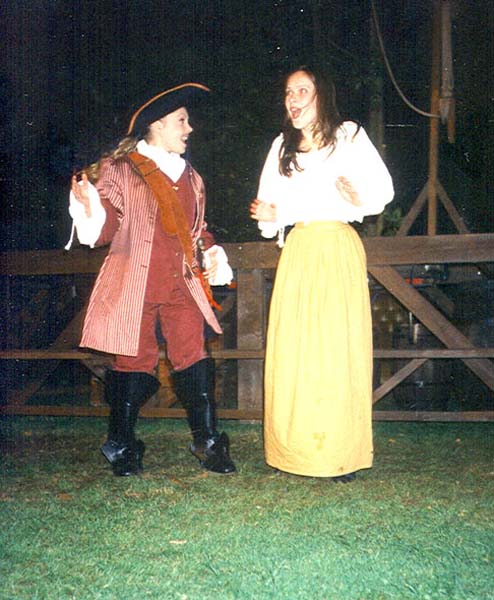
Richard Lloyd is an engaging Plume, with a huge armoury of charm to bamboozle the simple peasantry and ensnare the ladies. This nimble-witted officer is balanced by Mike Brown as the other one, the boastful Brazen, who works in manic bursts of energy, like a firework that is always exploding into renewed life.
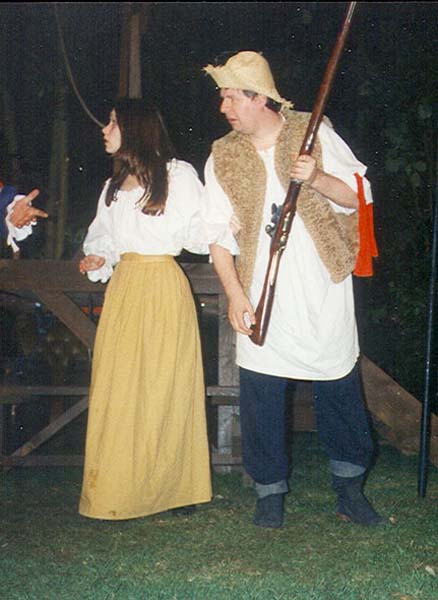
The rustics are a joy to behold; Daniel Ireson and Peter Bird as the easily duped Herefordshire duo Pearman and Appletree; Mark Taylor as the blockish Bullock; and especially Sinead Russell as Bullock’s sister Rose, whose knowing simplicity is her only weapon against the gallant attractions of the predator males. Tatiana Allison repeats her old role of rich Melinda, sharing a great display of waspishness with Claire Andreadis, whose Silvia is perhaps the subtlest and most rounded portrayal of an evening not exactly short of them. Chris Argles is her father, Justice Balance, a wise-foolish country gentleman of impressive gravity.
Reviewed by Donald Madgwick for The Croydon Advertiser
Other Productions